




If you like chicken pot pie, and love having a shelf full of easy to make meals, you’re going to love this chicken pot pie filling canning recipe!
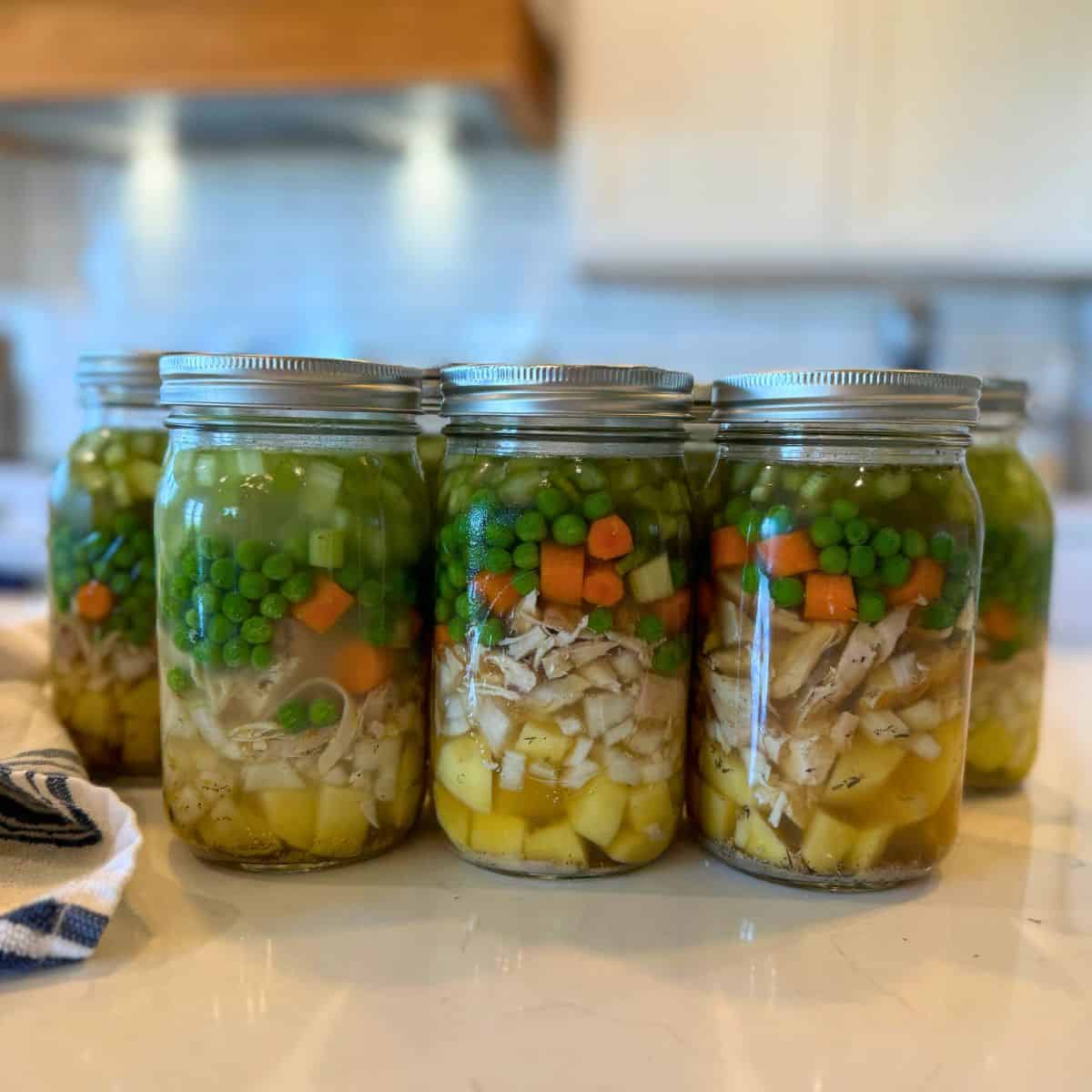
I updated this recipe to be as safe as possible… While the processing time for chicken pot pie filling is long enough to destroy botulism spores, a raw-pack method for a mixed dish like this can be a problem… The main issue is that raw-packed food, especially a mix of different ingredients, contains a lot of trapped air.
During the pressure canning process, the air expands and forces liquid out of the jars, it’s called siphoning. When the air escapes, the liquid level inside the jar drops below the food, leaving some of the food exposed to the air. The food is still considered safe as long as the jar seals, but the quality can suffer, it can become discolored or spoil more quickly.
Chicken Pot Pie Filling Canning Recipe
This recipe is a hot-packed, pressure-canned meal starter, ensuring it’s shelf-stable and safe to store. It’s easy to put together, and makes 7 quart jars for easy dinners that go perfect with soft sourdough rolls or cheddar biscuits!
Is this safe to can? Yes! This is a tested and safe recipe because we are using the hot-pack method and processing it for the correct time. The pressure canning process reaches temperatures high enough to destroy harmful bacteria.
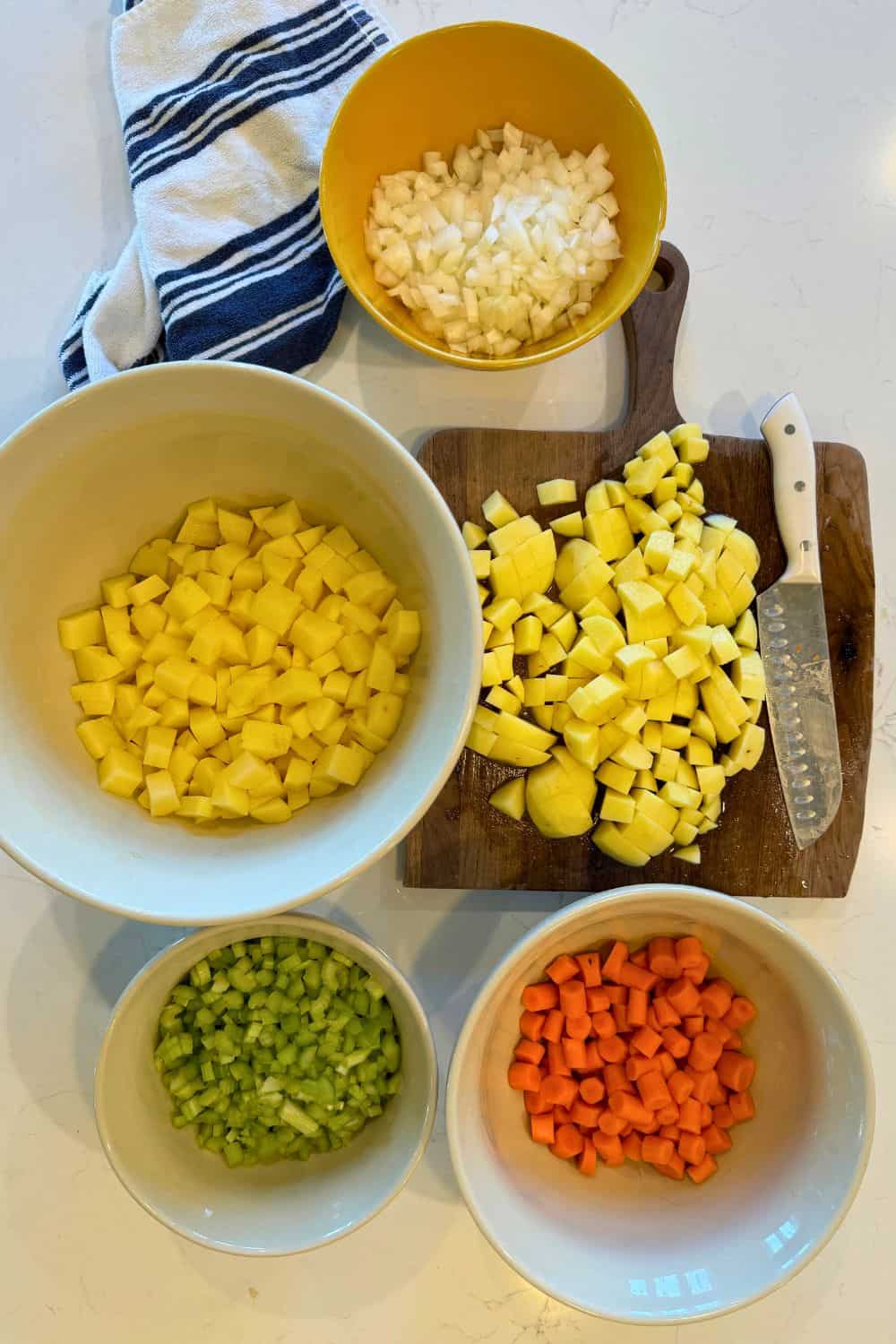
Key Ingredients for Canned Chicken Pot Pie
When canning chicken pot pie filling, selecting and preparing the right ingredients is about more than just flavor—it’s about ensuring safety and quality in every jar.
- Boneless, Skinless Cooked Chicken (7-8 cups): The star of the show! Using cooked, boneless, and skinless chicken is essential for canning safety and quality. I love using rotisserie chicken because it’s already cooked and seasoned, saving you a ton of time.
- Red or Yukon Gold Potatoes, Peeled and Chopped (7 cups): These potatoes provide a hearty, comforting texture. I specifically recommend Red or Yukon Gold varieties because they hold their shape better during processing and won’t get mushy. All potatoes must be peeled for safe canning.
- Diced Onion (3 1/2 cups) & Chopped Celery (3 1/2 cups): These vegetables form the flavor base. Onions and celery add savory notes and a wonderful depth of flavor that develops beautifully in the jar.
- Carrots, Peeled and Chopped (5 cups): Carrots bring a touch of sweetness and color. Like the potatoes, they’re firm enough to withstand the canning process without turning to mush.
- Frozen Peas (3 1/2 cups): While they go into the hot mixture, the frozen peas will help them from getting too soft during the heating process.
- Salt, Thyme, and Pepper: Salt is essential for flavor, and thyme is the quintessential herb for chicken pot pie, adding a warm, earthy aroma. I personally love a touch of fresh ground black pepper, but it’s optional.
- Chicken Broth or Water (3 quarts): This is where you get to choose your adventure. Bone broth will add a richer, deeper flavor, but clear broth or plain water also works perfectly well.
How To Make Chicken Pot Pie Filling Canning Recipe
Pressure Canning Safety: Before you begin, make sure your pressure canner is in good working order. Check the rubber seal and ensure all vents are clear. Always follow the manufacturer’s instructions for your specific canner.
Prep Your Canner and Jars: Place the metal rack at the bottom of your pressure canner. Add the correct amount of water to the canner. (For example, my weighted Presto pressure canner takes 3 quarts of water.) Wash and prepare 7 quart-sized canning jars with new lids and rings. Keep the jars hot.
Cook the Filling: In a large pot, combine the prepared chicken, potatoes, carrots, onions, and celery. Add the chicken broth or water, salt, and seasonings. Bring the mixture to a full, rolling boil over medium-high heat. Once boiling, reduce the heat and let it simmer for 5 minutes. Remove the pot from the heat and stir in the frozen peas.
Pack the Jars: Ladle the hot filling into your hot, prepared jars, leaving 1 inch of headspace at the top. Use a non-metallic spatula or bubbler to carefully remove any trapped air bubbles. Wipe each jar rim clean with a washcloth dampened with white vinegar to remove any residue. Center a new, clean lid on each jar and screw on the bands to finger-tight.
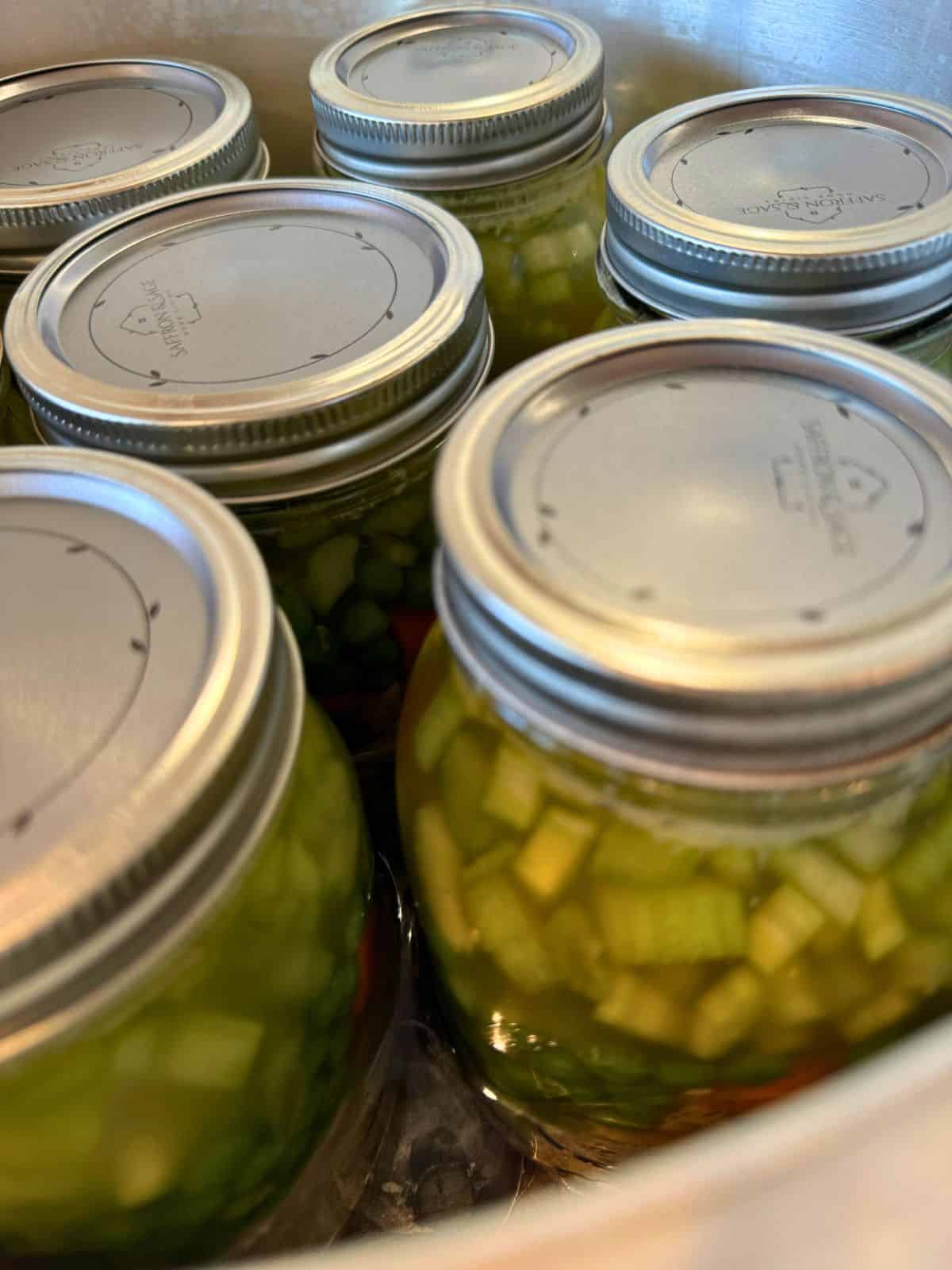
Pressure Canning: Place the filled jars into the prepared pressure canner. Lock the lid onto the canner. Heat on medium-high and let a steady stream of steam vent for 10 full minutes before placing the weighted gauge on top. Let the canner come up to pressure. When the gauge begins to jiggle steadily, set your timer for 90 minutes for quart jars.
Maintain a steady, rocking motion of the weighted gauge throughout the entire processing time. Adjust your heat as needed. (Note: Adjust pressure for your specific altitude. At 2,500 feet elevation, you would use a 15-pound weight.)
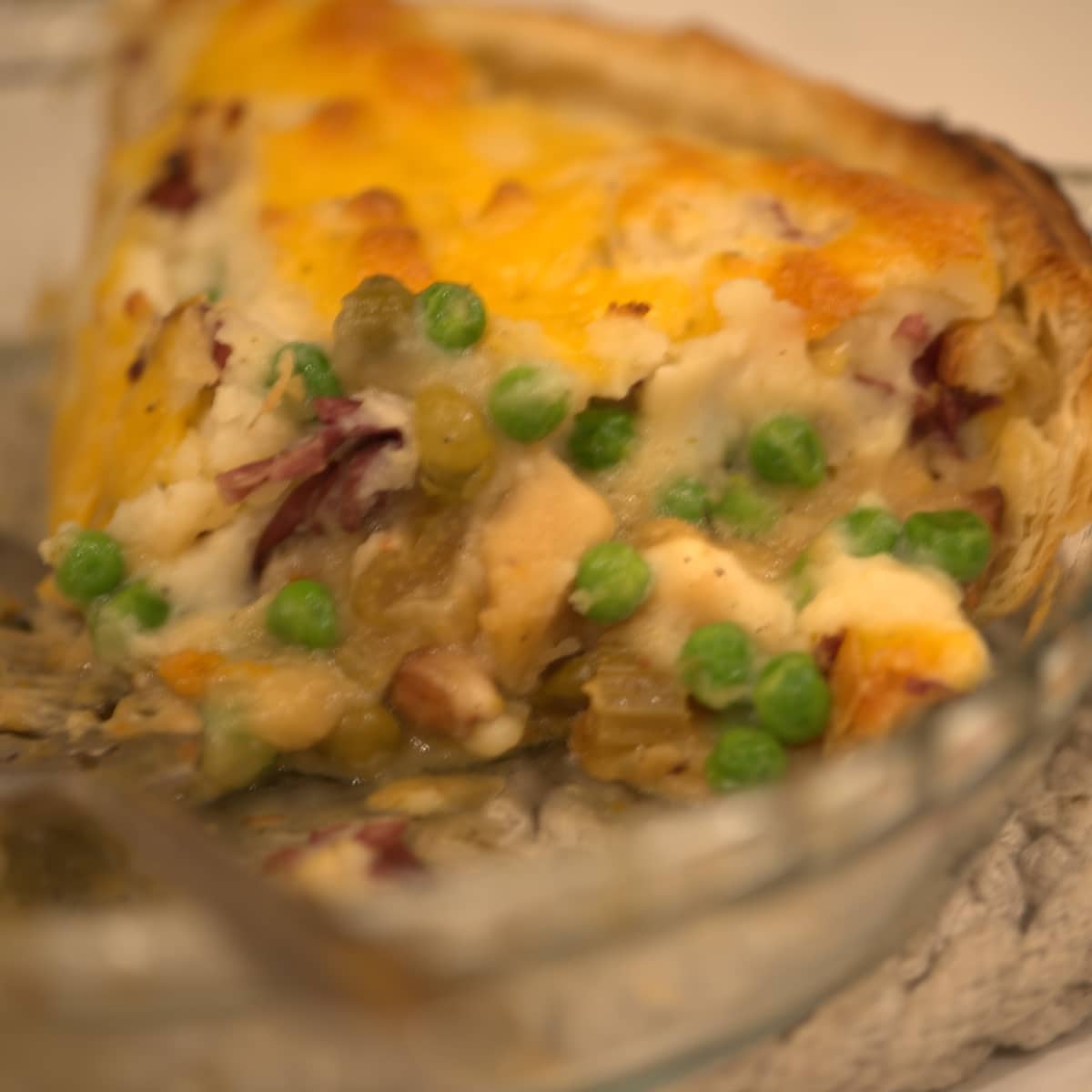
Cooling Down: After 90 minutes, turn off the heat and let the canner cool down completely and naturally until the pressure returns to zero. Do not rush this process. Once the pressure is at zero, carefully remove the weighted gauge. Wait at least 10 more minutes before unlocking and removing the canner lid.
Let the jars sit in the canner for another 10 minutes before carefully removing them with a jar lifter to a towel on the counter.
Do not tip or move the jars. Let them cool for a full 24 hours before checking the seals, removing the rings, and storing them on the shelf.
I want to know what YOU think… Please review the recipe card!
Chicken Pot Pie Filling Canning Recipe
Ingredients
- 8 cups boneless skinless Cooked Chicken cubed or shredded
- 8 cups Red potatoes or Yukon gold peeled and chopped (peels must be removed for safety)
- 3 1/2 cups Diced Onion
- 3 1/2 cups Chopped Celery
- 5 cups peeled and chopped Carrots
- 3 1/2 cups Frozen Peas
- 7 teaspoons Salt and (optional) Pepper
- 2 teaspoons dried Thyme leaves
- 3 quarts chicken Broth or Water.
Instructions
- Prepare your pressure canner and jars. Check the seal and vents. Add water to the canner and place the bottom rack in. Wash 7 quart jars, new lids, and bands, keeping the jars hot until ready to fill.
- Make the filling. In a large stock pot, combine the chopped chicken, potatoes, carrots, onions, and celery. Add the broth, thyme, and salt (and pepper if using). Bring the mixture to a full, rolling boil. Reduce heat and simmer for 5 minutes. Remove from heat and stir in the frozen peas.
- Pack the jars. Ladle the hot filling into the hot jars, leaving 1 inch of headspace.
- Remove air bubbles. Use a non-metallic utensil to remove any trapped air bubbles.
- Seal the jars. Wipe the rims clean. Center a new lid on each jar and screw on the band to finger-tight.
- Pressure can. Place the jars into the pressure canner, lock the lid, and heat on medium-high. Let steam vent from the canner for 10 full minutes before placing the weight on the vent pipe.
- Process. Let the canner come up to pressure (consult your canner’s manual for your specific altitude). Once at the correct pressure, process the quart jars for 90 minutes.
- Cool and store. After 90 minutes, turn off the heat and allow the canner to cool naturally until the pressure is at zero. Wait 10 minutes before removing the lid, and then another 10 minutes before removing the jars. Let the jars cool on a towel for 24 hours. Check seals, remove rings, and store.
Notes
Nutrition

About Juliea
Juliea is a mother of six, a sourdough baker, and a homestead builder living in Idaho. Alongside her husband and their horse, Dude, she manages a busy farmhouse and shares her love for scratch-cooking and simple homemaking. Through her blog and YouTube channel, she helps millions of families every year master the art of the handmade home.


23 comments
Dawn
What would the time be for pints
Juliea Huffaker
Hi Dawn… Thanks for asking! Pint jars would be 1 hour and 15 minutes processing time… That’s after the pressure canner has come to pressure and the weight is rocking back and forth.
Juliea Huffaker
Hi Nancy! I have 2 weighted presto pressure canners that I use. I bought them from Walmart, they are a base model without a pressure gauge, instead they just use weights, which I think is much simpler;)
Ian
Love the idea of being able to make a pie that quick after a hard day’s work
Rach
Hi how long would this be shelf stable for?
Juliea Huffaker
at least 1 year but we’ve actually used them after 2years… They’re fine just lose nutritional value after a year. As long as they are sealed well they will store.
Cindy
I don’t can, but I’m wondering if I could freeze the filling and use it as suggested?
Juliea Huffaker
Hello Cindy! You could freezer the filling if you cook it first. Some of the vegetables don’t freeze well without blanching them first;)
Dian Carpenter
Is there any difference between this recipe and a beef pot pie recipe
Juliea Huffaker
You can totally do the same thing with beef for beef pot pies.. Good idea!
Fonda
Love this, but I only have a water bath canner. Can I use it instead?
Juliea Huffaker
Hi Fonda… Thanks for asking about canning the chicken pot pie filling in a water bath canner. It is not safe to can chicken pot pie filling in a water bath canner. There are a couple of key reasons for this, and food safety is always the top priority when it comes to home canning:
Low-Acid Food: Chicken, vegetables (other than acidified tomatoes), are all considered low-acid foods. Low-acid environments are breeding grounds for a dangerous bacterium called Clostridium botulinum, which produces a potentially deadly toxin that causes botulism. Water bath canning only reaches a temperature of 212°F (100°C), which is sufficient for killing molds, yeasts, and some bacteria in high-acid foods (like many fruits and properly acidified tomato products). However, this temperature is not high enough to kill the spores of Clostridium botulinum in low-acid foods. These spores can survive boiling water temperatures.
The only safe method for canning low-acid foods like chicken pot pie filling is pressure canning. Pressure canners create a pressurized environment that allows the temperature inside the jars to reach 240°F (116°C) or higher. This high temperature is necessary to kill the Clostridium botulinum spores and ensure the safety of the preserved food.
Because your chicken pot pie filling contains low-acid ingredients, it absolutely requires pressure canning for safe preservation. Water bath canning will not eliminate the risk of botulism.
For the safety of yourself and anyone who might consume it, I strongly advise against canning this recipe using a water bath canner.
Please let me know if you have any other questions! Food safety is so important, and I’m happy to help in any way I can.
Ashley scully
If I add lemon juice to it then could I water bathe them. I just dont have a pressure canner. Thank you
Juliea Huffaker
Hi Ashley!
Thank you so much for reaching out with such an important question about canning! It shows you’re taking safety seriously, which is the most important part of home food preservation.
Regarding your idea of adding lemon juice to water bath can chicken pot pie filling: I completely understand the thought process, as lemon juice is indeed a fantastic way to safely acidify some foods for water bath canning. BUT, for a recipe like chicken pot pie filling, even with added lemon juice, water bath canning is unfortunately not a safe method… It must be pressure canned.
Here’s why:
Low-Acid Ingredients Require Higher Temperatures: Chicken pot pie filling contains a combination of low-acid ingredients, including chicken (meat), and most vegetables (like carrots, potatoes, peas, celery). These foods have a naturally high pH (meaning they are low in acid). To safely preserve low-acid foods, we need to reach temperatures far higher than boiling water can achieve. Boiling water (at sea level) only reaches 212°F (100°C).
The Threat of botulinum: The primary concern with low-acid foods is the risk of botulism, a very serious and potentially deadly foodborne illness caused by the bacterium Clostridium botulinum. These bacteria produce spores that are incredibly resistant to heat. While boiling water can kill many spoilage organisms, it cannot destroy botulism spores.
Pressure Canning’s Role: A pressure canner works by creating a pressurized environment that allows the water inside to reach much higher temperatures (typically 240°F to 250°F, or 116°C to 121°C). These higher temperatures, held for a precise amount of time, are essential to effectively destroy botulism spores, making the low-acid food safe for shelf-stable storage.
Lemon Juice Acidification Has Limits: While lemon juice (or other acids like vinegar) is successfully used to acidify borderline acidic foods like tomatoes, or to create safe pickling brines, it cannot lower the pH of a complex, dense, and primarily low-acid mixture like chicken pot pie filling enough to make it safe for water bath canning. The sheer volume and variety of low-acid ingredients mean that simply adding lemon juice isn’t sufficient to change the overall pH drastically or consistently enough throughout the entire jar to inhibit botulism growth.
The USDA and all reputable canning resources strongly recommend and require pressure canning for all meat, poultry, and most vegetable mixtures, including delicious recipes like chicken pot pie filling.
I truly appreciate your dedication to preserving food for your family, and I hope this explanation helps clarify why a pressure canner is absolutely essential for this type of recipe. Your safety is always the top priority!
Shannon
Oh you government fool…this can absolutely be water bathed safely.
Juliea Huffaker
Hi Shannon, It actually has very little to do with arbitrary “government rules” and everything to do with basic food science:
The Fat, Protein, and pH Problem
Low Acid Risk: Boiling water bath canning is only proven safe for high-acid foods (like pickles, fruits, and jams). Chicken pot pie filling—which is packed with low-acid ingredients like chicken, and vegetables—creates the perfect environment for Clostridium botulinum spores (the bacteria that causes botulism) to thrive if they aren’t completely destroyed.
The Temperature Requirement: To destroy those botulism spores in low-acid foods, you must reach a sustained internal temperature of 240°F (116°C).
Water Can’t Do It: Water boils at 212°F (100°C). No matter how long you boil a jar in a water bath, the internal contents will never reach the required 240°F.
Cassandra
100% correct. I’m actually an exec chef and food safety certified. It is never…NEVER safe to can low-acid, high-protein foods like meat and poultry in anything other than a pressure canner. I’ve seen many “Plain” folks (Amish/Mennonite) doing oven canning of chicken meat and claiming “we’ve always done it this way.” Doesn’t matter. Science is science. You’ve just been lucky. Period.
Shannon
It’s a 3 hr WB…but check your elevation as that may add time. If adding corn, add 30 minutes. Do not add lemon.
Google elevation time
Dixie
Super yummy and easy to follow!!
Stacie Bohn
Can the peas be omitted or replaced with something else?
Juliea Huffaker
Hi Stacie! That is a great question. Yes you can alter the vegetables in this filling to suit your family’s tastes while keeping it safe for the pressure canner!
Here is what you need to know if you want to skip or change the peas:
To Omit Them: You can simply leave the peas out entirely. You do not need to replace them with anything or change the processing time.
Safe Substitutions: If you want to replace them with another vegetable, whole-kernel corn or green beans are fantastic, and classic in pot pie. Just make sure to dice the green beans so they match the size of your other veggies.
The Golden Rule for Canning Vegetables: You can safely swap or add low-acid vegetables (like corn or green beans) as long as you do not exceed the total volume of vegetables called for in the recipe, and you do not add any thickeners like flour, cornstarch, or Clear Jel to the jar before canning. Save the thickening step for when you open the jar to bake your pie!
Jenna H
Is it necessary to hot pack this recipe, or would it be ok to pack the ingredients raw?
Juliea Huffaker
Hi Jenna! The official USDA and NCHFP guidelines recommend the hot pack method for mixed “meal-in-a-jar” recipes (like this chicken pot pie filling) to ensure proper heat penetration (and to help prevent siphoning)… I have personally raw packed it with success, but if you want to be 100% safe, hot pack it. If you do choose to raw pack, keep in mind it may experience a bit of siphoning, so minding your headspace is key!