If you’re making these 5 sourdough mistakes, your starter will never reach its full potential.
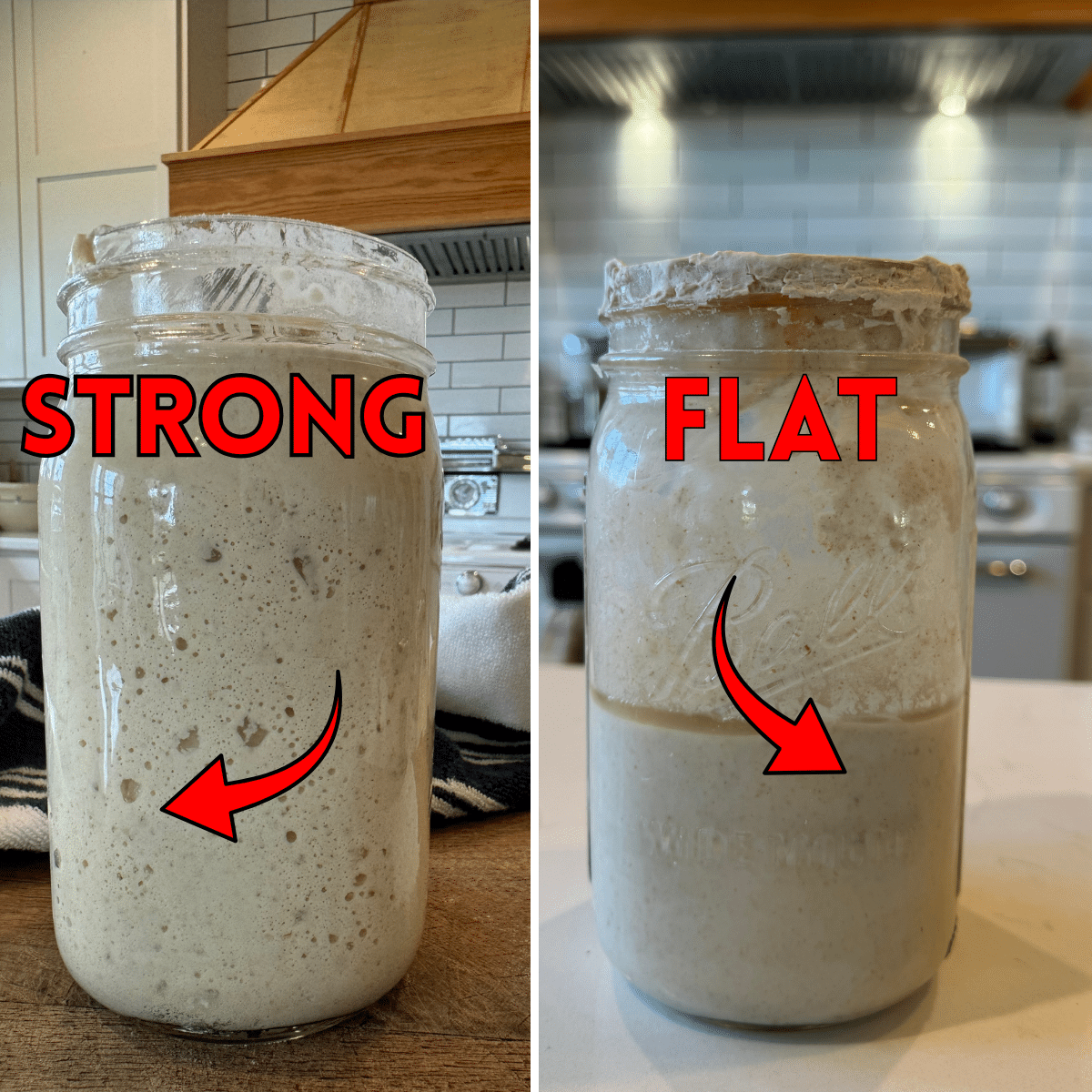
Have you ever pulled your cold sourdough starter out of the fridge, fed it, waited, and… nothing? No bubbles, no rise, just a flat jar of flour and water?
After 10 years of milling my own grains and baking farmhouse style sourdough bread, I’ve learned that sourdough success isn’t luck… It’s about avoiding these 5 common pitfalls!
1. The “Hydration Trap” (Thickness vs. Weight)
The most common reason a sourdough starter fails to rise—and a loaf fails to spring in the oven—isn’t usually “dead yeast.” It’s often a simple physics problem I call the Hydration Trap.
It isn’t that the yeast is “dead”—it’s that the starter is too thin. I call this the Hydration Trap.
Baking with different flours can be tricky… Organic Einkorn is a “sticky” grain…. If it’s too wet, the gas bubbles just slide out of the dough instead of pushing it up. This is why weight matters more than volume.
Einkorn is an ancient grain with only 12 chromosomes (as mentioned in my latest video). That’s why it’s “stickier” and why the “Hydration Trap” is more common with this specific flour.

The Mistake: Following a recipe by “cups” instead of weight, leading to a starter that is too thin to rise. Many beginner recipes suggest feeding your starter “one cup of flour and one cup of water.” Because water is much heavier than flour, this leads to a starter with a “pancake batter” consistency.
In thin starters, the CO2 bubbles made by the fermenting yeasts just float to the top and escape… You might see a few bubbles on the surface, but the jar will never double in size because the mixture isn’t thick enough to trap those gasses and push the mixture upward.
If you start with a thin, over-hydrated starter, your bread dough is already starting at a disadvantage.
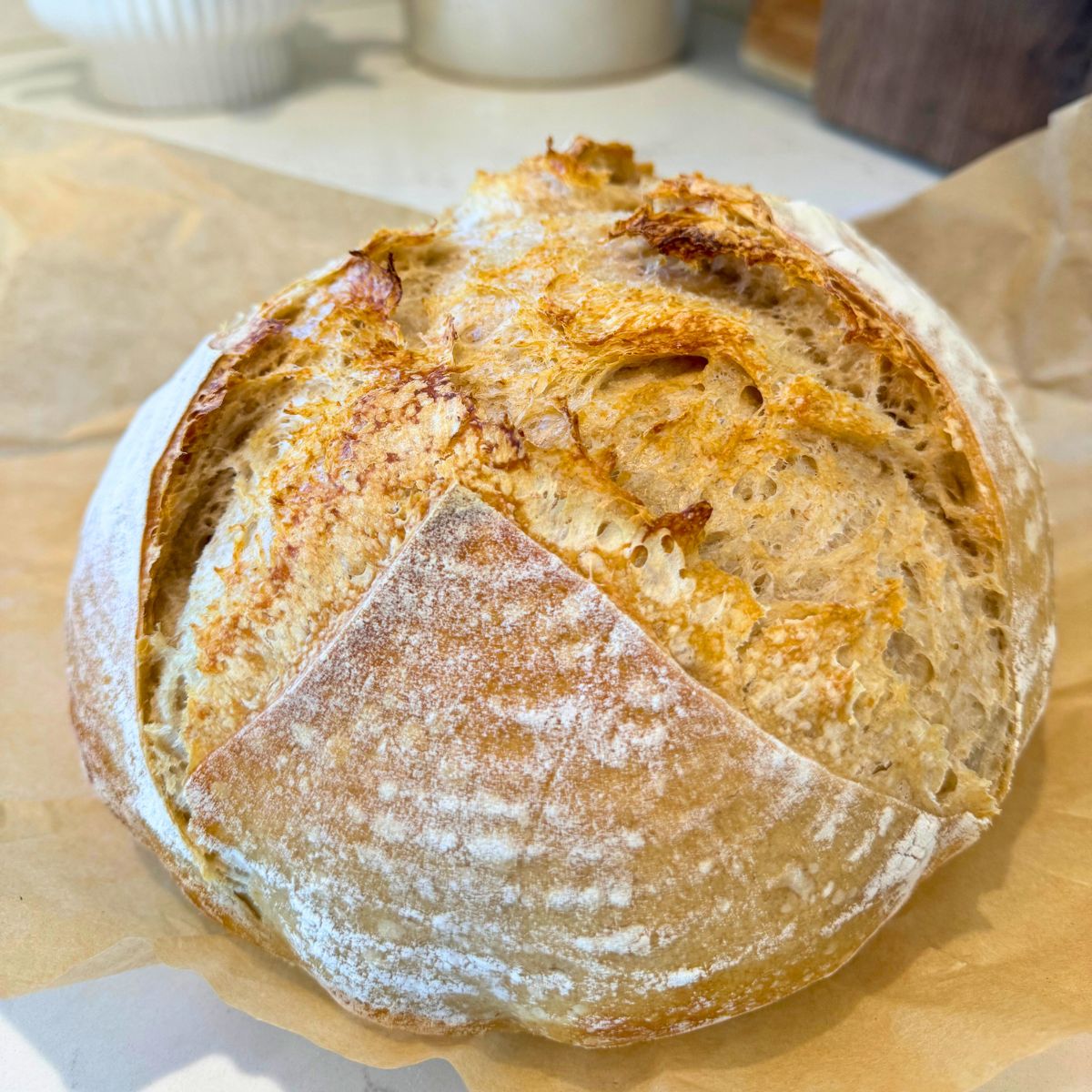
When your dough is too wet, it loses its “structural integrity.” Instead of holding a beautiful round shape (a boule), the dough will spread out flat like a pancake the moment it hits the baking stone. In the oven, instead of a dramatic “oven spring,” the steam escapes, leaving you with a dense, flat, and gummy loaf.
This is especially true for Organic Einkorn…. Einkorn is an ancient grain with a different protein structure, and it doesn’t “absorb” water the same way modern wheat flours do. It just gets sticky. If your Einkorn starter or dough is too wet, the gas bubbles, created by the starter, will slide right out of the weaker gluten structure in the dough instead of lifting your loaf!
How to Fix it: Show why a kitchen scale is a game-changer for Einkorn especially, since it absorbs water differently than modern wheat. The secret I show in my starter troubleshooting video is to aim for a “Muffin Batter” or “Thick Biscuit Dough” consistency.
- Use a Scale: Switch to grams for a 1:1 ratio.
- The Spoon Test: When you stir your starter, it should be stiff and provide resistance. If it’s runny, add a tablespoon of flour at a time until it’s thick enough to hold its shape.
- Strong Starter = Strong Loaf: A thick, active starter creates a “vigorous” fermentation that gives your bread the strength it needs to rise high in the oven.
2. The “Premature Bake” (How to tell it’s Peaked)
Jeanne Stelmok, on Youtube, asked me: “Don’t you wait for the starter to deflate slightly to know it’s peaked?”
The Mistake: Using the starter too early (before it bubbles up) or too late (after it has already collapsed).
The Bread Impact: When you bake with under-active starter, your dough will take forever to rise (or bulk ferment), this leads to “fool’s crumb”… That’s where you have giant holes at the top but a dense, gummy layer at the bottom. 😉 Sound familiar?
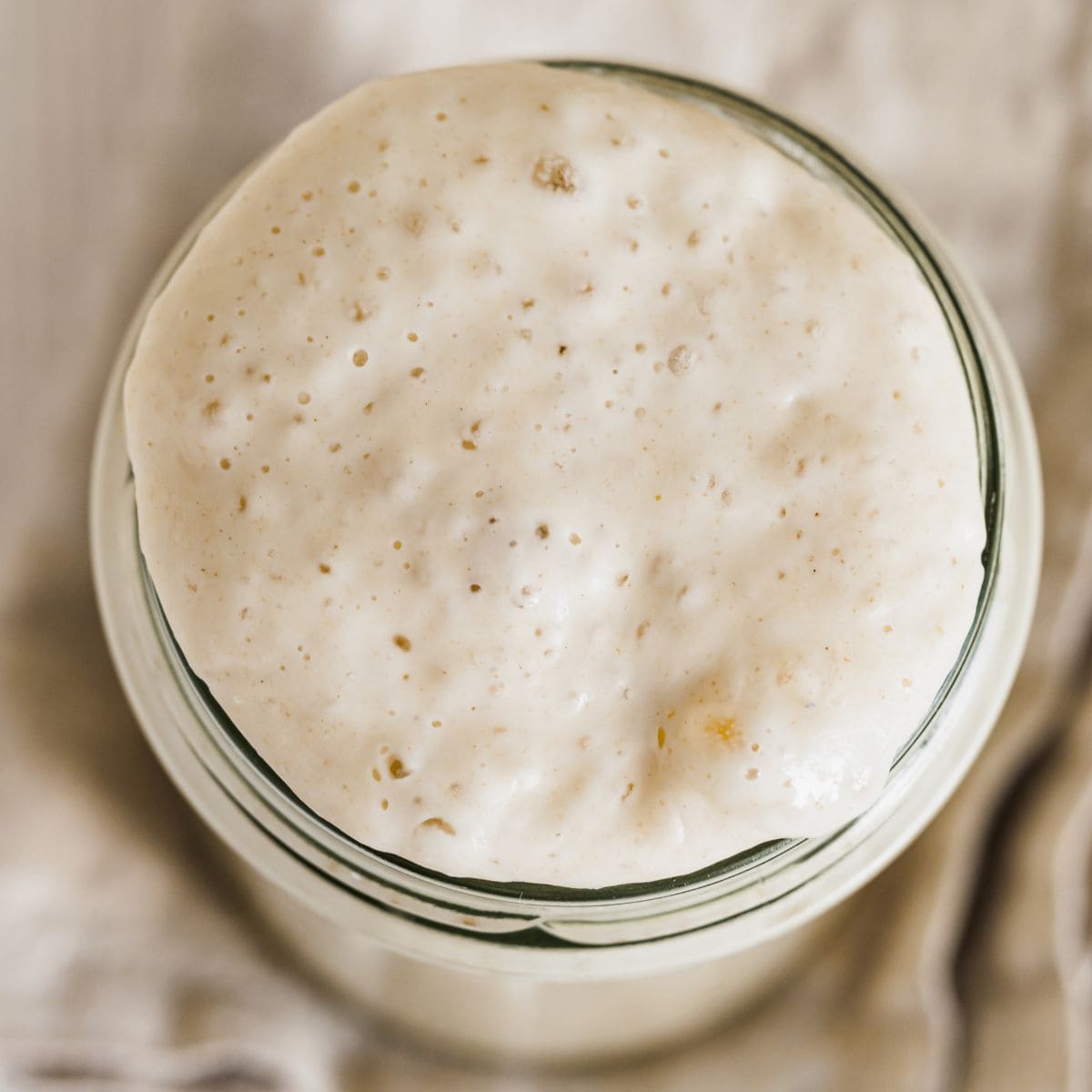
The Fix: Don’t just look for bubbles; look for the Dome. A ready starter should be arched at the top.
Pro Tip: “Float Test” If you are unsure that your starter is ready, just do a simple float test… Here’s how: drop a teaspoon of starter in water; if it floats, it’s ready… But, if it sinks, it’s either under-active or past its prime.

3. Temperature Neglect (The “Cold Counter” Problem)
The Mistake: Expecting fermentation to happen on a cold winter countertop.
Cold temperatures slow down yeast but can make the bacteria (the sour part) more active. If your kitchen is too cold, your bread might end up overly sour and “heavy” because the yeast never got warm enough to produce enough gas for a good rise.
The Fix: Place your dough in a warm spot… If your kitchen is too cold, preheat your oven to 180 degrees F for 5 minutes then turn it off. This wont cook your dough but will be just warm enough to help it rise! You can also use the top of the refrigerator, it’s usually warmer up there! I use my 1954 Western Holly (old oven with a pilot light) to help my dough rise… Especially during colder months!

4. “Starving” the Starter (Feeding Ratios)
The Mistake: Not discarding enough old starter, which means you aren’t giving the yeast enough fresh “food” to actually multiply. Or being afraid to “discard” and just adding a little flour to a big jar of old starter.
An “acidic” or “starved” starter weakens the gluten in your bread dough. This is why some loaves turn into a sticky mess during shaping even if you followed the recipe perfectly—the starter literally started “eating” the dough structure.
The Fix: Follow a strict 1:1:1 ratio (Starter:Flour:Water by weight). This ensures the yeast has enough fresh food to stay strong and healthy.

5. Using the Wrong Water (The Chlorine Killer)
The Mistake: Using heavily chlorinated tap water.
Chlorine is used to actually kill bacteria, and bacteria is exactly what you’re trying to grow! using chlorinated water will stunt your starter’s growth… Leading to a weaker ferment, lower rise, and a loaf with less of that delicious sourdough flavor we all love.
The Fix: Use filtered water or simply leave a jar of tap water out on the counter overnight to let the chlorine dissipate!
Now that you’ve mastered your starter, it’s time to bake! Check out my Simple Sourdough for Beginners to put your healthy, active starter to work.


About Juliea
Juliea is a mother of six, a sourdough baker, and a homestead builder living in Idaho. Alongside her husband and their horse, Dude, she manages a busy farmhouse and shares her love for scratch-cooking and simple homemaking. Through her blog and YouTube channel, she helps millions of families every year master the art of the handmade home.