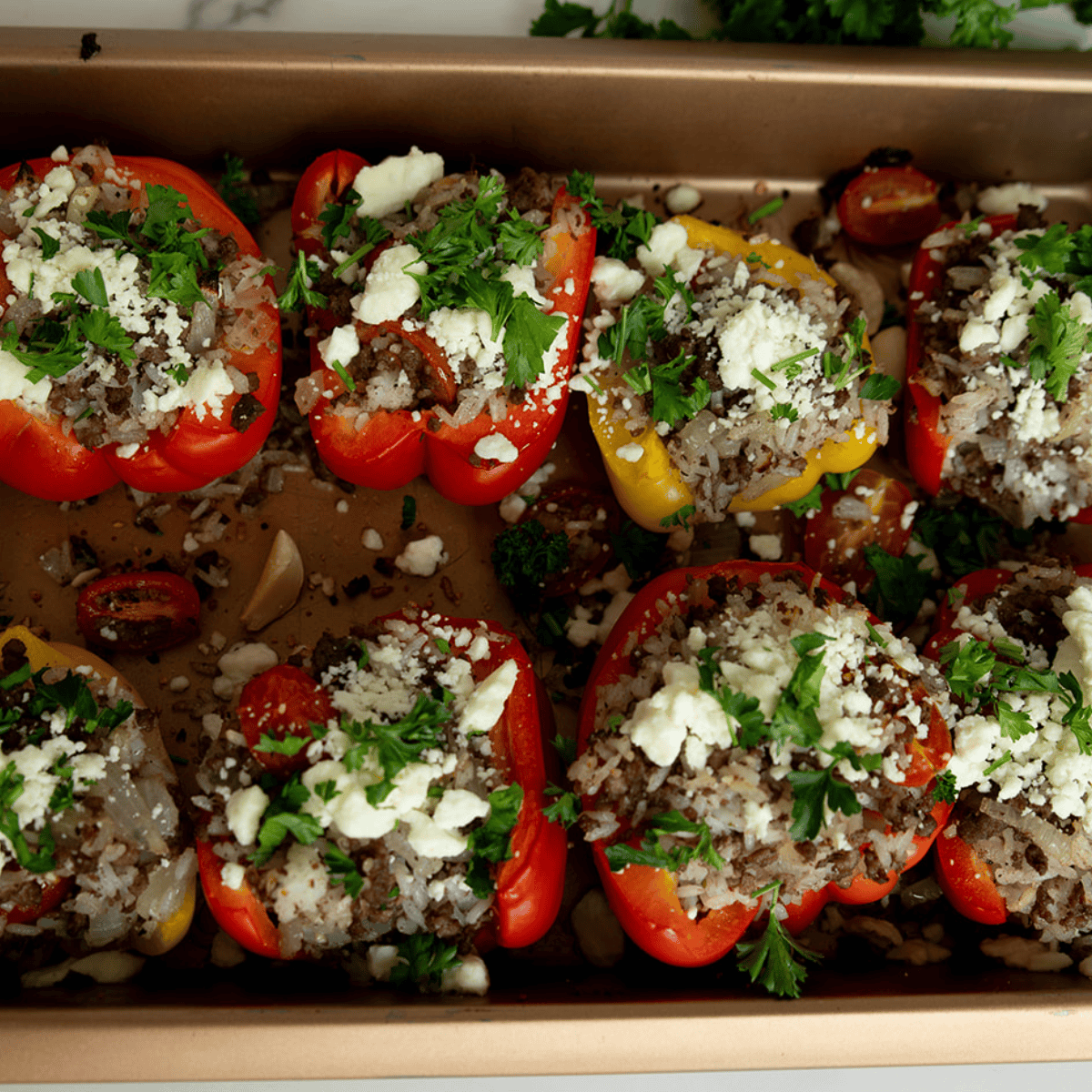


If you’re looking for the ultimate ‘set it and forget it’ summer dinner, this Lemon Garlic Grilled Chicken is the answer.

By pounding the chicken to an even thickness and allowing it to bathe in a bright, savory marinade of fresh lemon juice, garlic, and coconut aminos overnight, you’re guaranteed a juicy, tender result every single time.
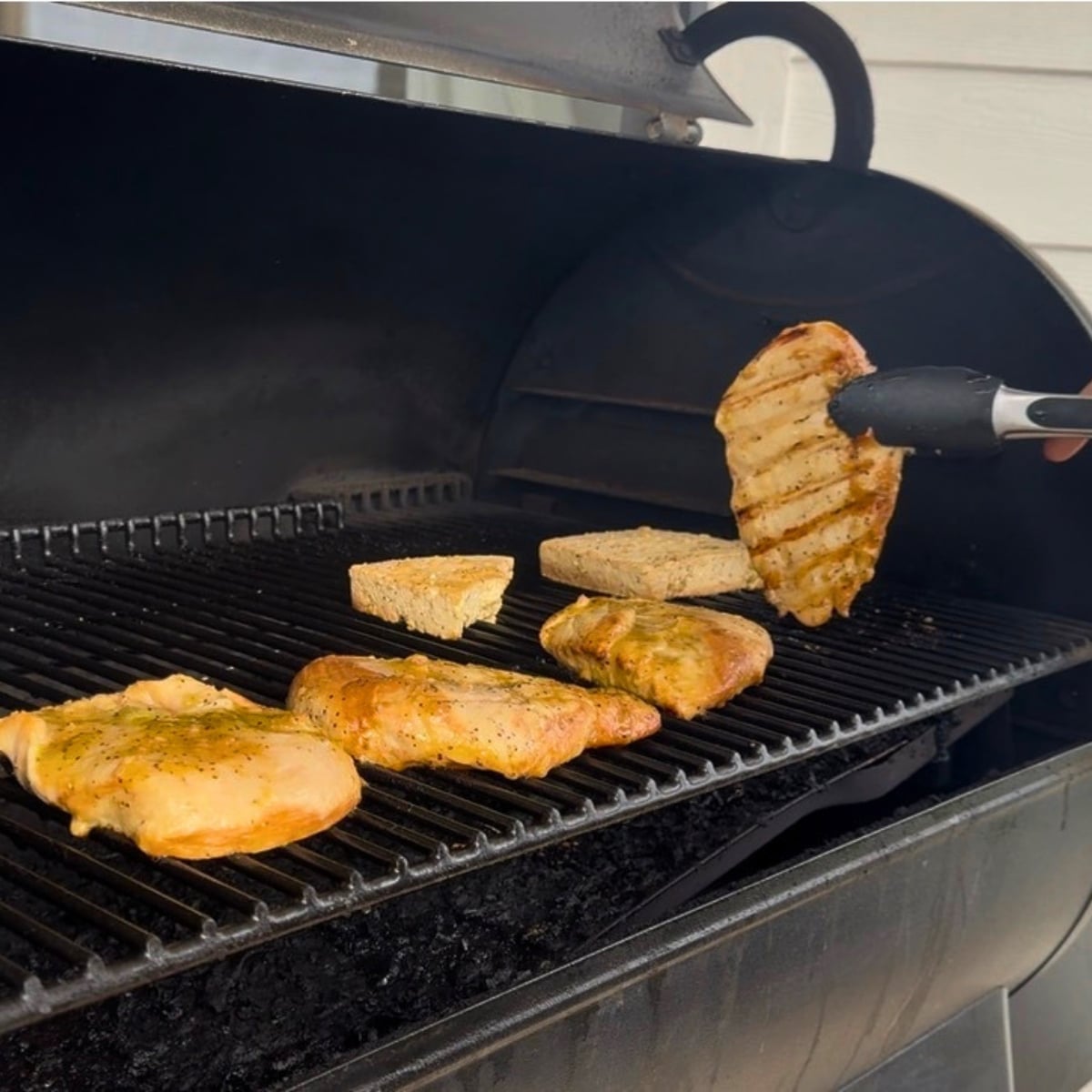
I recently tested this on the Traeger grill for that hint of wood-fired flavor, but the real surprise? It’s equally delicious on firm tofu! Whether you’re a meal prepper or a backyard BBQ enthusiast, this versatile marinade is about to become your new kitchen staple.”
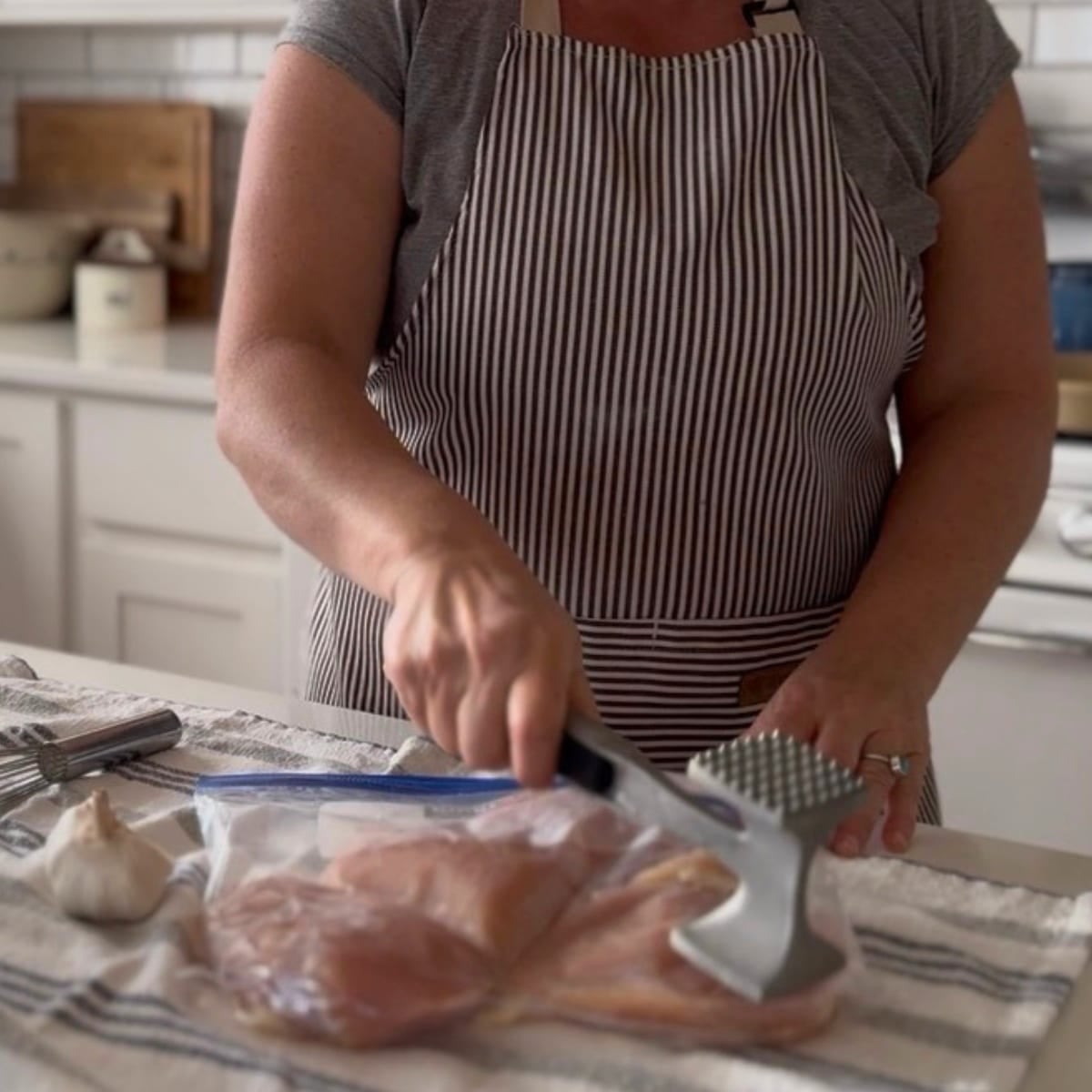
The Secret to Juicy Chicken: Why We Pound It
Chicken breasts are naturally asymmetrical, or thicker on one side. By pounding them to a uniform thickness (about 1/2 inch), you make sure every part of the breast finishes cooking at the same time! So you don’t have one thin dry side and one juicey thick side. 😉 Don’t sress it though… You don’t need a fancy meat mallet – a heavy rolling pin or even the bottom of a small skillet works perfectly!

What to Serve with Lemon Garlic Chicken
To turn this into a complete farmhouse feast, you want sides that lean into those fresh, summery flavors or hearty classics. Here are my favorite pairings straight from the blog:
Summer Salad Pairings: For a light and vibrant meal, I love serving this chicken over my Green Goddess Salad or alongside my Light Strawberry Salad. If you’re heading to a potluck, you can’t go wrong pairing this with my Loaded Potato Salad—the zingy lemon marinade cuts through the creamy potatoes perfectly.
Cozy Farmhouse Sides: If you’re looking for comfort, serve the sliced chicken and its juices over a bed of Creamy Mashed Potatoes and Gravy. For the bread basket, my Sourdough Cornbread or Soft Sourdough Rolls are always a hit at our table.
Roasted Vegetables: During the cooler months, I lean toward Maple Roasted Butternut Squash or my Oven Roasted Asparagus with Parmesan Crust. The salty parmesan on the asparagus is a dream come true with the garlic-lemon profile of the chicken!

Ingredients & Substitutions
One of my favorite things about this marinade is how flexible it is! If your pantry looks a little different than mine today, here is how you can swap things out without losing that delicious flavor:
Coconut Aminos vs. Soy Sauce: I love using coconut aminos because they are a fantastic gluten-free and soy-free option that adds a lovely, subtle sweetness. If you don’t have them on hand, regular soy sauce works great—just keep in mind it’s a bit saltier, so you might want to slightly reduce the added salt in the recipe.
Fresh vs. Bottled Lemon Juice: If you take one piece of advice from me today, let it be this: use fresh lemons! Bottled juice often contains preservatives that can leave a “tinny” or artificial aftertaste. Freshly squeezed juice provides that bright, zingy punch that makes this chicken sing.
Garlic: There is nothing quite like the “bite” of fresh garlic cloves. However, if you’re in a pinch, you can swap the fresh cloves for 1 teaspoon of garlic powder. It won’t be quite as pungent, but it will still be delicious.
How to Know When Your Chicken is Done
I know – cooking chicken can be the most intimidating part for a beginner. You want it safe to eat, but you don’t want to be chewing on a piece of rubber! Here is how to get it perfect:
Trust the Thermometer (Color is a Liar!): Don’t rely on cutting into the meat to check the color. Use a digital meat thermometer. For the juiciest results, pull the chicken off the grill when it hits 160°F. During the 5-minute rest, the temperature will naturally rise to the food-safe 165°F. This is called “carry-over cooking,” and it’s the secret to moist chicken.
The Visual & Tactile Cues: If you don’t have a thermometer yet, look for the juices to run clear (no pink!). You can also use the “touch test”—the meat should feel firm, similar to the fleshy base of your thumb when you press your thumb and pinky finger together.
Traeger vs. Gas Grill vs. Stovetop
I personally love the hint of wood-fired flavor we get from our Traeger, but this recipe is a winner no matter how you heat it up:
Traeger/Pellet Grill: I recommend using Hickory or Apple wood pellets. The sweetness of the fruitwood or the classic punch of hickory pairs beautifully with the lemon and garlic.
Gas Grill: Simply preheat to medium-high (around 400°F) and follow the same timing!
Stovetop: No grill? No problem. Get a cast-iron skillet nice and hot over medium-high heat with a splash of oil. You’ll get a gorgeous sear that rivals any backyard BBQ.

Troubleshooting & FAQ
Even with a simple marinade, grilling chicken can be tricky if you’re new to the game. Here are the most common questions I get to help you ensure your farmhouse dinner is a success!
Why is my grilled chicken rubbery or tough?
There are usually two culprits here:
- Overcooking: Chicken breast becomes rubbery the second it passes 165°F. Pull it at 160°F and let it rest!
- Skipping the Pound: If you don’t pound the chicken to an even thickness, the thin end will be overcooked and rubbery by the time the thick center is safe to eat.
Can I marinate the chicken for too long?
Yes! Because this marinade uses fresh lemon juice, the acid will eventually start to break down the proteins in the meat. I recommend a “sweet spot” of 8 to 12 hours. If you go past 24 hours, the texture can become mealy or mushy.
- My chicken is sticking to the grill! How do I fix this?
Clean Grates: Always start with a clean, brushed grill. - The “Release” Rule: Chicken will naturally “release” from the grates once it has formed a proper sear. If you try to flip it and it pulls or tears, give it another 60 seconds!
- Oil the Meat, Not just the Grill: Since our marinade includes Olive Oil, your chicken is already prepped to slide right off.
Can I use chicken thighs instead of breasts?
Absolutely! Chicken thighs are much more forgiving because they have a higher fat content. If using thighs, you don’t need to pound them thin, but you should grill them to an internal temperature of 175°F for the best texture.
Help! I forgot to marinate it overnight.
Don’t panic. Even 30 minutes in this lemon garlic mixture will add great surface flavor. If you’re short on time, poke a few holes in the chicken with a fork before adding it to the bag to help the marinade penetrate faster.
Is it safe to use the leftover marinade as a sauce?
Only if you boil it first. Since the marinade has been in contact with raw chicken, it contains bacteria. To use it as a basting sauce, pour it into a small saucepan and bring it to a rolling boil for at least 5 minutes. (Or, better yet, just set aside a small splash of the “clean” marinade before adding the chicken!)
I want to know what YOU think, Please review the recipe card!
Lemon Garlic Grilled Chicken – The Best Marinade!
Ingredients
- 1/2 cup Olive Oil
- 1/4 cup Lemon Juice Freshly squeezed is best!
- 1/3 cup Coconut Aminos or Soy Sauce
- 3-4 Large Garlic Cloves Crushed
- 1/2 teaspoon Salt
- 1/2 teaspoon Coarse Ground Black Pepper
- 4 Boneless Skinless Chicken Breasts Pounded to 1/2 inch thickness
Instructions
- Prep the Chicken: Place chicken breasts between two sheets of plastic wrap. Use a meat mallet or rolling pin to pound them to an even 1/2-inch thickness.
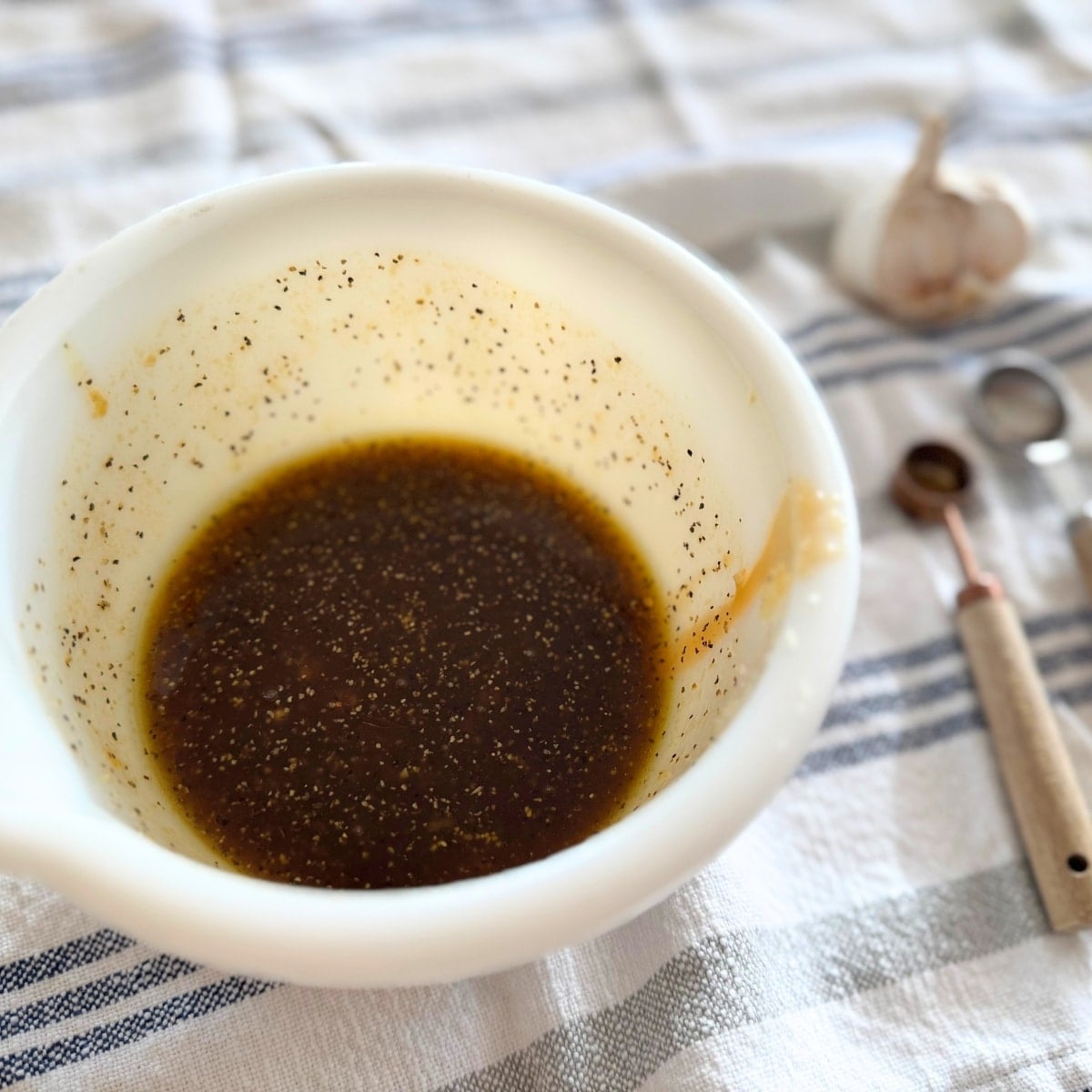
- Mix Marinade: In a small bowl or directly in a gallon-sized zip-lock bag, whisk together olive oil, lemon juice, coconut aminos, garlic, salt, and pepper.
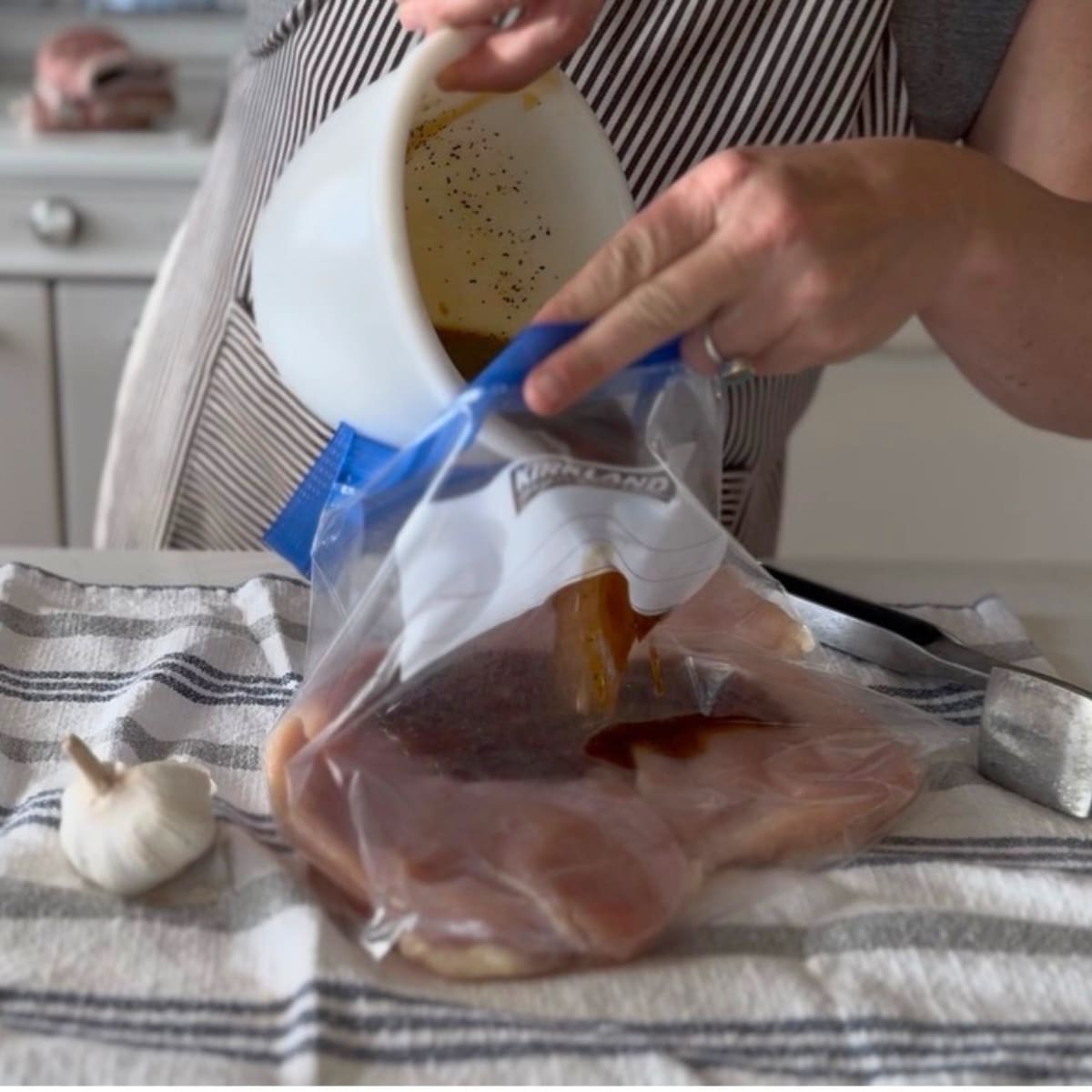
- Marinate: Add the chicken to the bag, seal tightly, and shake to coat. Place in the refrigerator for at least 4 hours, but ideally overnight (8-12 hours) for maximum tenderness.
- Preheat: Preheat your Traeger (or gas grill) to 400°F.
- Grill: Place chicken on the grill grates. Grill for 6–8 minutes per side, or until the internal temperature reaches 165°F.
- Rest: Remove from the grill and let the chicken rest for 5 minutes before slicing to keep the juices locked in.
Notes
Nutrition

About Juliea
Juliea is a mother of six, a sourdough baker, and a homestead builder living in Idaho. Alongside her husband and their horse, Dude, she manages a busy farmhouse and shares her love for scratch-cooking and simple homemaking. Through her blog and YouTube channel, she helps millions of families every year master the art of the handmade home.