


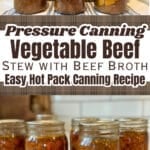
This easy beef stew canning recipe comes from years of canning…. It makes 7 quarts of vegetable beef stew, ready to store long term, on the shelf, for whenever you want a perfect beef stew fast!

I’m so excited to share an updated version of my family’s favorite beef stew canning recipe! After years of using my raw pack method… I decided to update this post to hot pack method.
I’ve decided to update this recipe to align with the safest, expert-recommended practices. This new method is simple, delicious, and ensures you’re putting the very best—and safest—food on your shelf. This beef stew is perfect for a cold winter night or a day when you want a quick, easy, and completely delicious dinner.
I love making this easy beef stew canning recipe… I love having several quarts of it on my shelf for easy meals! It stores for over a year, the beef is so tender and the broth is delicious… It’s perfect for dinner a busy cold day, or an easy dinner when you’re not feeling well!
Make sure to read through the blog post before making this recipe. There are more details in this blog post than on the recipe card. If you are an experienced canner, skip down to print the recipe card!

Easy Beef Stew Canning Recipe
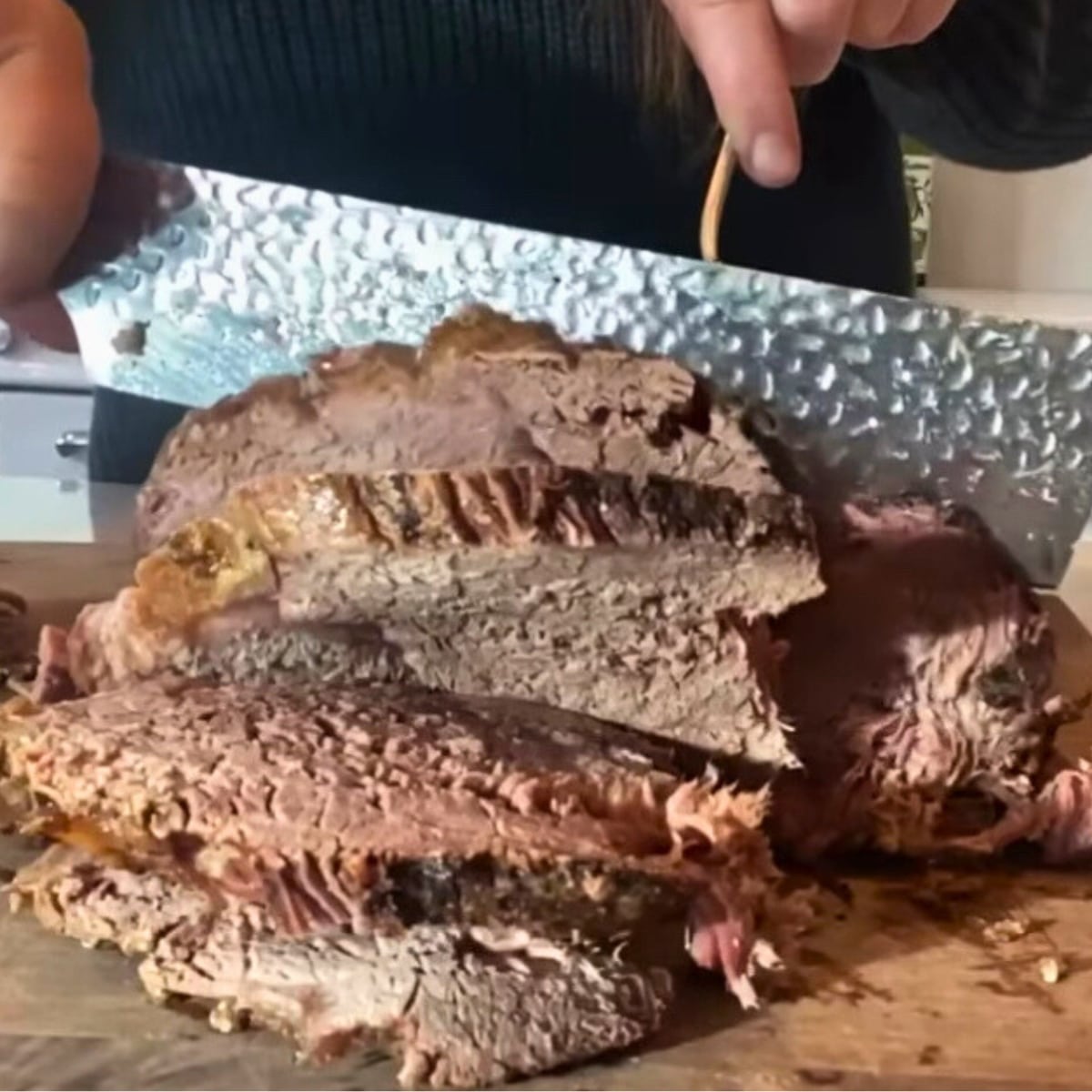
For this beef stew, you can use precooked roast beef, or raw roast beef, they both work great… As far as cuts go, I like to use stew meat from the butcher, cubed rump roast, or cooked and cubed chuck roast with the fat removed.
You can adjust this recipe to however many quart jars your pressure canner takes at one time… If your canner takes 14 quart jars at once, double it! If your pressure canner only holds 6 quart jars at a time, use 6 cups of roast beef instead and adjust the other ingredients likewise!
How to Make Easy Beef Stew Canning Recipe
Sanitize your quart jars lids and bands… Check jar rims to make sure there are no chips that would prevent sealing.
Prep your pressure canner according to manufacturer instructions… Mine needs 3 quarts of water in it. Check the rubber seal, and make sure there are no cracks. Make sure the pressure button is working right, and that there are no blockages in the vent pipe. *Optional, but recommended: Add 1/4 cup white vinegar to the pressure canner to help keep jars clean.

Build Flavor First: This is the most important step! I like to chop all my ingredients first and have them ready to go.
In a large stockpot, brown your beef and then add the onions, celery, carrots, and garlic. Once those have softened, add in the potatoes, salt, and pepper, and then cover it all with your broth. Bring the mixture to a boil and let it simmer for about 5 minutes.
Fill the Jars: Line your hot, sanitized jars up on the counter. Using a measuring cup and a funnel, ladle the hot beef stew into each jar, leaving a 1-inch headspace at the top. Use a de-bubbler tool or a butter knife to gently move the ingredients around and release any trapped air bubbles.
Dampen a clean cloth with vinegar and wipe each jar rim to clean any food debris. Place new, clean lids on top of each jar and screw the bands down to finger-tight.

Pressure Canning Beef Stew
Beef stew is a low-acid food and is not safe to can in a water bath canner. Pressure canners cook at a much higher temperature and are the only way to safely can beef stew.
Place your prepared jars into the prepared pressure canner. Lock the lid shut according to the manufacturer’s directions, and KEEP the WEIGHTS OFF for now. Turn the heat to medium-high and bring it to a boil. Let the steam vent through the vent pipe for a full 10 minutes before placing the weights on top.
After you vent the steam for 10 minutes and place the weights on top, let the canner come to pressure. If you’re using a weighted canner, like me, wait for the weights to start rocking back and forth. Then, after the weights are rocking, set your timer for 90 minutes for quart jars (or 75 minutes for pint jars).
Cool Down Process: When the time is up, turn the heat off, and let the pressure naturally release. DO NOT OPEN OR RELEASE PRESSURE—just leave your pressure canner alone until the pressure button goes down on its own. Then open the vent. Wait for 10 more minutes before carefully removing the jars with your jar lifter.
Cool Down Process: Turn heat off, and let pressure naturally release… DO NOT OPEN OR RELEASE PRESSURE. Just turn the heat off, and leave your pressure canner alone till the pressure button goes down on it’s own. Then open the vent. Remove the canner lid, and wait for 10 more minutes before removing the jars from the canner with your jar lifter.
Place hot jars on a clean towel on the counter to help prevent them from breaking… Let them cool undisturbed for 24 hours. After they’ve cooled, you can remove the bands, check the seals, wipe the jars clean, and store them for future enjoyment!
If you remove jars before letting the pressure canner naturally cool to release pressure… And before waiting 10 more minutes after removing the lid… The quick change in temperature will cause the broth in your jars to siphon out of the jars. This leaves less broth in your jars… And they may not seal as well.
Just like with pressure canned beef or raw chicken…. Place hot jars on a clean towel on the counter and let them cool for 24 hours. Remove bands, wipe jars clean, check seals, and store them for future enjoyment!
I want to know what YOU think? Please leave a review in the Recipe Card!
Easy Beef Stew Canning Recipe
Equipment
- Pressure Canner
- 7 quart jars with new lids and bands
- jar lifter
- De-bubbler tool or butter knife
- Clean washcloth or tea towel
- Funnel
- 1 Large stockpot
Ingredients
- 7 cups roast beef chopped into 1-inch cubes
- 7 cups potatoes peeled and cubed
- 3.5 cups onions chopped
- 3.5 cups celery chopped
- 3.5 cups carrots peeled and chopped
- 7 cloves garlic minced
- 3 quarts broth chicken or beef
- 7 teaspoons salt
- 3.5 teaspoons black pepper ground
- 2 tablespoons olive oil for browning beef
Instructions
- Prepare Canner and Jars: Add water to the pressure canner and set it aside. Wash and sanitize your jars, lids, and bands. Keep them warm until ready to fill.
- Cook the Stew: In a large stockpot, heat the olive oil and brown the cubed roast beef. Add the onions, celery, carrots, and garlic and cook until the vegetables soften. Add the potatoes, salt, and pepper, then pour in the broth. Bring to a boil and simmer for 5 minutes.
- Pack Jars: Ladle the hot stew into hot jars, leaving a 1-inch headspace. Use a de-bubbler to remove air bubbles. Wipe the jar rims clean with a damp cloth.
- Seal Jars: Center new lids on the jars and screw the bands on to finger-tight.
- Process: Place jars in the pressure canner. Lock the lid and heat until a steady stream of steam vents from the canner. Vent for 10 minutes before placing weights on top.
- Canning Time: Process quart jars for 90 minutes at 10 pounds of pressure (or 15 pounds for altitudes above 1,000 feet).
- Natural Release: Turn off the heat and let the canner cool naturally until the pressure gauge reads zero. Wait 10 more minutes before removing the lid and then remove the jars.
- Cool and Store: Place the jars on a towel and let them cool for 24 hours. Check the seals, remove the bands, and store in a cool, dark place.
Notes
- Broth: For a richer flavor, use beef broth. For a lighter option, use chicken broth or a combination of both.
- Spices: Customize the flavor with additional spices like thyme, rosemary, or bay leaves.
- Serving Suggestion: To enjoy your home-canned beef stew, first remove the lid from the jar. Skim off any excess fat from the surface. Pour the contents of the jar into a pot and heat over medium heat, stirring occasionally, until heated through. Avoid boiling to prevent the stew from becoming watery. For added flavor, season with salt, pepper, or other spices. Serve hot with crusty bread, mashed potatoes, or noodles. Remember to always inspect the jar for any signs of spoilage before opening. If the seal is broken or the contents appear discolored or have an off odor, discard the jar.
Nutrition

About Juliea
Juliea is a mother of six, a sourdough baker, and a homestead builder living in Idaho. Alongside her husband and their horse, Dude, she manages a busy farmhouse and shares her love for scratch-cooking and simple homemaking. Through her blog and YouTube channel, she helps millions of families every year master the art of the handmade home.




15 comments
Jenn
Do you know approximately how many pounds of stew meat you used? I want to double this and make 20 pints. Thanks!
Juliea Huffaker
Hi Jenn! Great questio! It’s about 1 pound of meat per cup (cooked) so you’ll need about 14 pounds of stew meat… Thank for asking. 🙂
Kate
I make Irish stew recipe, it calls for Guiness. Can I use Guiness in this recipe?
Juliea Huffaker
Hi Kate, Yes you can use Guinness in this recipe too, just substitute it 1:1 with the broth!
Tammy
Can you add tomatoes to this recipe???
Mike
Can you add diced tomatoes
Sharon
Quick question: Was this ever a raw pack recipe a year ago? I could’ve sworn I used your raw pack recipe a year ago – same ingredients but raw pack canning instead.
Thanks!
Great recipe by the way –
Juliea Huffaker
Hi Sharon! Yes originally… But, I’ve learned that the density of the combination of beef and potatoes (etc) can potentially make this recipe dangerous as raw pack. I’m putting safety first for my family (and my subscribers) by hot packing;)
Sharon
Thank you! Good decision and great appreciated!
Timber
This recipe is so delicious! It’s a great storage canned food when you want a warm stew just open it up and heat it.
Dixie Clements
Simple and delicious beef stew! This has been a favorite to pull off of our shelf and reheat! Super yummy!
Laurie
Can you substitute sweet potatoes instead of white? And what about using crushed garlic (from a jar) instead of a clove minced?
Juliea Huffaker
Hi Laurie.. Great questions! It’s a firm no on those… You can’t substitute the garlic or sweet potatoes for white potatoes in a canning recipe.
They seem similar, but they have different densities and starches and acidity levels. Canning recipes are all about safety, and they’re meticulously tested to make sure the heat penetrates the entire jar and kills off any harmful bacteria. Swapping out a different type of vegetable, even if it seems similar, can change that process and make the recipe unsafe.
For safe canning, you have to follow a tested recipe exactly. So, if you want to can sweet potatoes, you’ll need to find a recipe that’s specifically for sweet potatoes and follow it to a T.
Joey
Can I use pork roast instead of beef???
Juliea Huffaker
Hi Joey! Yes you can can pork roast instead of beef the same way, and the processing time is the same according to the National Center for Home Food Preservation (NCHFP). For a roast cut into pieces the recommended times are:
Pints: Process for 75 minutes.
Quarts: Process for 90 minutes.
These times are based on using a pressure canner at the correct pressure for your altitude. The pressure you need to maintain will depend on your canner type (dial gauge or weighted gauge) and your elevation.