



Crunchy, tangy, and bursting with vibrant color, homemade fermented red sauerkraut recipe (often called Ruby Kraut) is one of the most rewarding ferments you can make in a home kitchen.

I love growing cabbages in the garden, and making sauerkraut is one of the best ways to preserve it! You can use this recipe to make red kraut or use green cabbages for a green sauerkraut. Red cabbage krout is my favorite, but either way, it’s delicious!
This bright purple cabbage sauerkraut recipe is super simple to make. It uses just TWO ingredients and, like everything good in life, requires a bit of patience!
If you like the tangy flavor of fermented foods, you’ll love this homemade red cabbage sauerkraut recipe. It’s easy to make, delicious, and an easy addition to meals.

While volume measurements like “1 tablespoon of salt per head of cabbage” are common in older recipes, cabbages vary wildly in weight—a small head might weigh 1.5 pounds, while a large garden head can hit 4 pounds! For consistent, safe lacto-fermentation, calculating salt by weight is the gold-standard method used by experienced fermenters.
The Science of Salt: Why Weight Matters
Lacto-fermentation relies on Lactobacillus bacteria to turn natural sugars into lactic acid, which preserves the vegetables and creates that signature sour crunch.
The Ideal Salinity: A 2% salt ratio by weight (0.02 x weight of prepped vegetables) creates the optimal environment. It inhibits bad bacteria and mold while allowing beneficial lactic acid bacteria to thrive and keep the cabbage crisp.
The Math Formula: Weight of prepped veggies in grams times 0.02 = Grams of salt needed… (For example: 1000g cabbage times 0.02 = 20g salt)
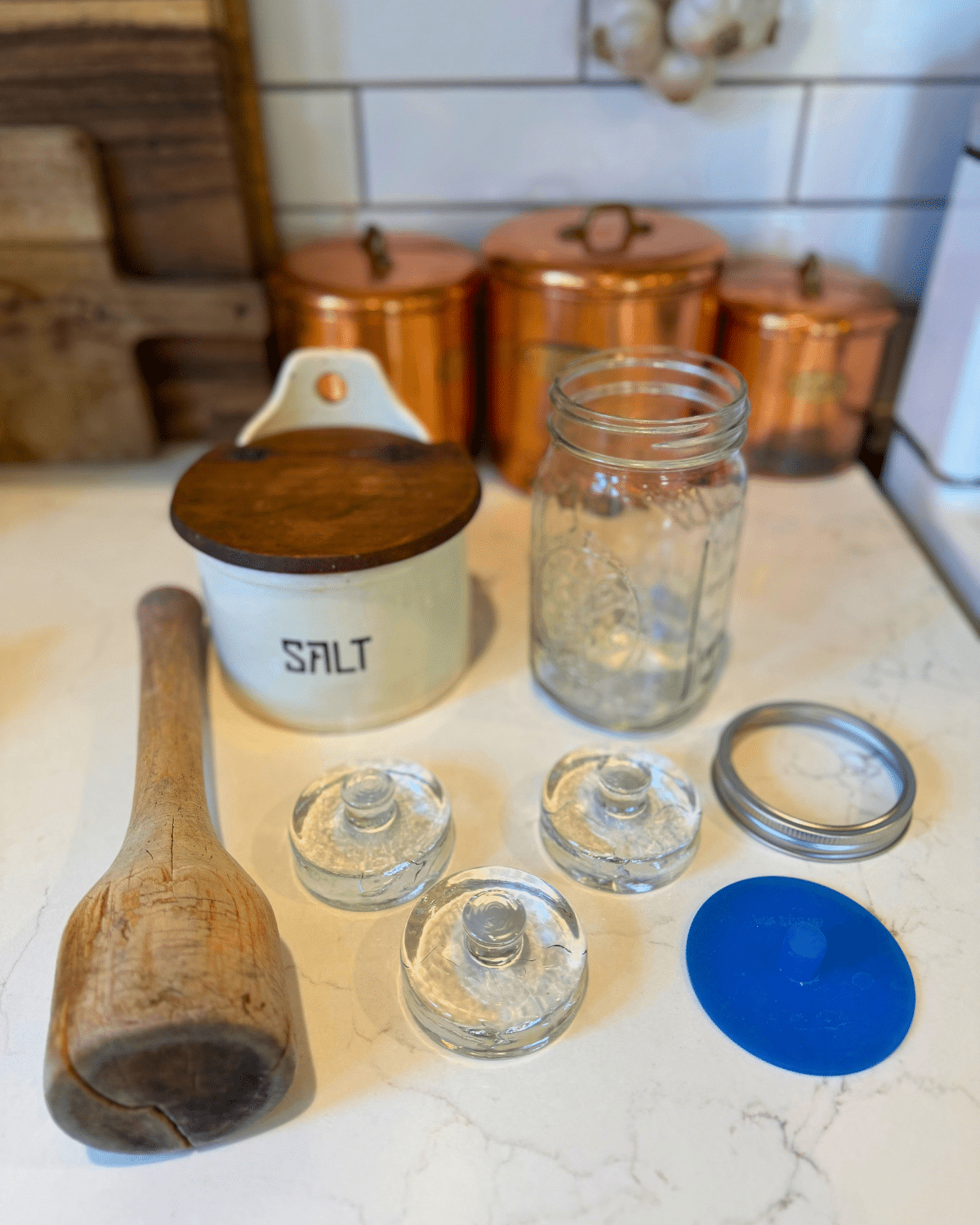
My Fermentation Equipment
- Digital Kitchen Scale: Essential for accurate weight-to-salt calculations.
- Fermentation Vessel: A wide-mouth quart or half-gallon Mason jar.
- Fermentation Weight or Spring: Keeps vegetables completely submerged beneath the brine to prevent surface mold.
- Airlock Lid or Fermentation Cap: Allows carbon dioxide gas to escape without letting oxygen in.
- Large Mixing Bowl & Chef’s Knife: For fine slicing and massaging.

Easy Hands-Off Brining & Pounding
The Passive Sweat Method (Cuts the Work in Half) – If you don’t feel like doing a heavy 5-to-10-minute massage right out of the gate, let salt do the heavy lifting! Just toss your shredded veggies with your calculated 2% salt, cover the bowl, and let it sit on the counter for 30 to 60 minutes. The osmotic pressure will naturally draw a ton of moisture right out of the cell walls. Once it’s sweated out on its own, the cabbage is wonderfully relaxed, meaning you only need a fraction of the effort to squeeze or pound it before packing your jar.
Old-Fashioned Wood Pounder Alternative – If you want to skip working it with your bare hands entirely, an old-fashioned wooden kraut pounder works wonders… After your cabbage has done its quick rest and sweat on the counter, a few firm thumps with a wooden tamper will easily break down the remaining fibrous structure and pack the jar down tight.
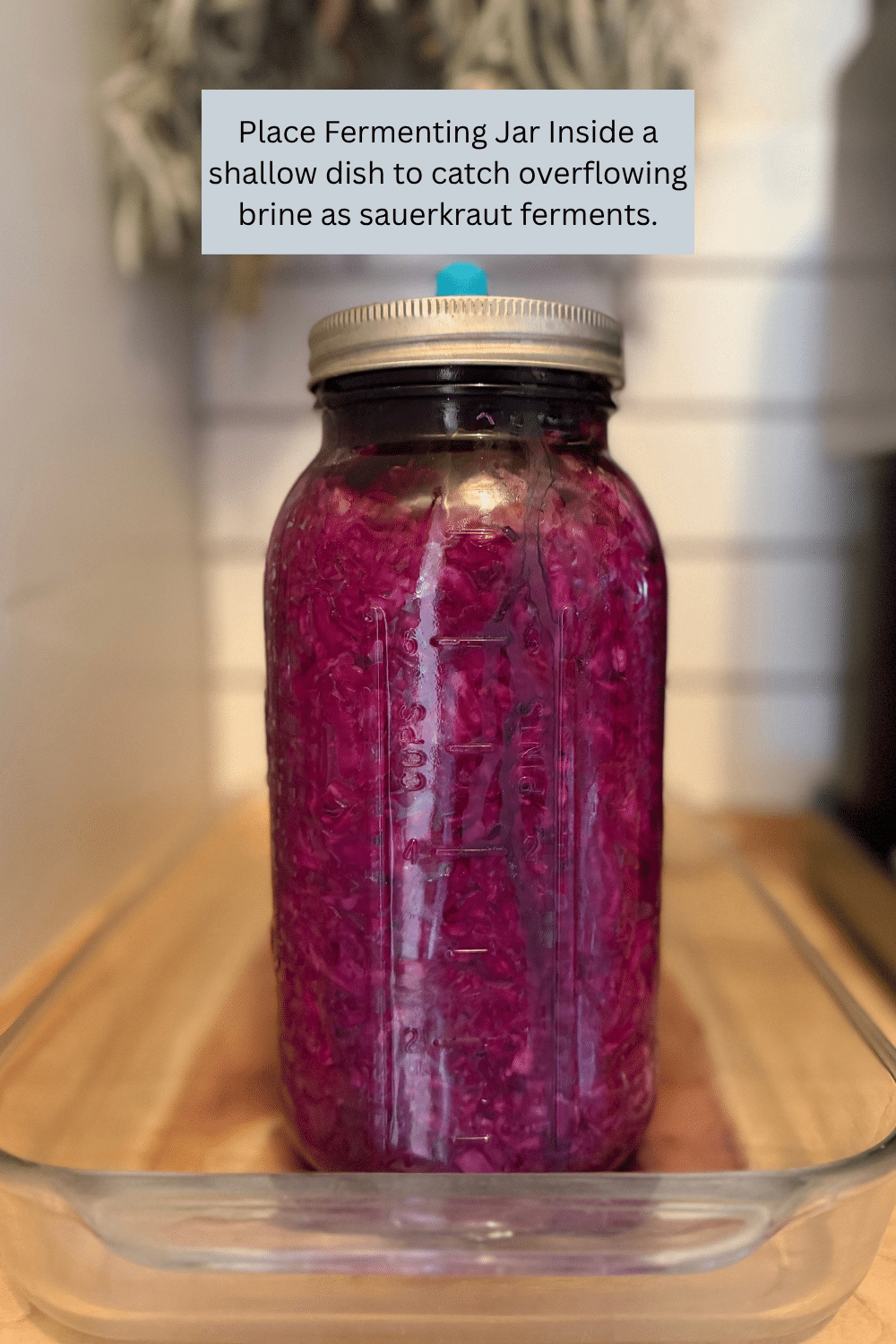
Pro-Tips for Perfect Sauerkraut
Choosing Salt: Always use non-iodized salt (sea salt, Himalayan pink, or pickling salt). Iodine and anti-caking agents in table salt can inhibit fermentation and turn brine cloudy or discolored.
Top-off Brine Rule: If your cabbage didn’t produce enough brine to cover the top layer, dissolve 1tsp (5g) non-iodized salt in 1cup (240 ml) filtered water and pour over the kraut until submerged.
Color Note: Red cabbage kraut naturally turns a brilliant magenta/ruby color during fermentation as lactic acid reacts with anthocyanin pigments.
Pairing Fermented Sauerkraut
Red cabbage sauerkraut is higher in natural sugars than green sauerkraut, which makes red kraut a perfectly sweet complement to savory dishes!
I love to top my hot dogs, bratwursts, or pulled pork sandwiches with fermented sauerkraut… Enjoy as an easy probiotic side dish to roast beef or pork loin roast. Or, add to a grilled sandwich… Ruben anyone?

Flavorful Add-Ins
You can easily mix and match other garden-fresh or pantry-staple ingredients based on what you have on hand. Just remember: the total combined weight of all your veggies and add-ins is what you use to calculate your 2% salt ratio!
- Aromatics & Spices: Caraway seeds, juniper berries, whole black peppercorns, or mustard seeds add classic, savory depth of flavor.
- Roots & Veggies: Thinly sliced radishes, grated parsnips, or shredded beets (though beets will turn your entire kraut a deep, vibrant ruby-pink!).
- Herbs: Fresh dill sprigs or garlic cloves tucked between the layers give a wonderful savory punch.
- Other Fruits: Apples and pears or tart green plums work beautifully if you’re harvesting them fresh from the trees.
Sauerkraut Recipe FAQ’s
Can I use iodized table salt for fermenting sauerkraut?
It’s best to skip standard table salt. The iodine and anti-caking agents can discolor your brine, cloud the liquid, and actually inhibit the beneficial lactobacillus bacteria. Stick to pure, non-iodized fine sea salt, pickling/canning salt, or Himalayan pink salt.
What if my cabbage doesn’t produce enough liquid?
While letting your cabbage sweat with salt—or giving it a good press with a wooden pounder—usually draws out plenty of natural brine, garden-fresh or drier heads can sometimes need a little help. If your vegetables aren’t fully submerged after packing, just top the jar off with a simple 2% brine solution (mix 1tsp – 5g non-iodized salt into 1 cup – 240ml of filtered water) until everything is safely covered.
How do I know when my sauerkraut is finished fermenting?
Fermentation is largely a matter of personal taste! Start taste-testing your kraut around day 14. Once it reaches the level of crisp tanginess you love, simply screw on a standard storage lid and move the jar to the refrigerator to slow down the fermentation process.
How long does homemade fermented kraut last in the fridge?
Because it’s a preserved “live food” packed with lactic acid, fermented sauerkraut keeps in the refrigerator for 4 – 6 months (and often much longer!). The flavor continues to develop and grow slightly more sour over time. 😉 It’s a great cold food storage for winter!
Did you make this red fermented sauerkraut recipe? I really want to know what YOU think… Please review the recipe card!
Fermented Red Sauerkraut Recipe
Ingredients
- 1 head of red cabbage medium
- about 1 tbsp Non-Iodized Sea Salt: Calculated at 2% of total prepped vegetable weight) Grams of veggies times .02 = Grams of Salt Calculated at 2% of total prepped vegetable weight) Grams of veggies times .02 = Grams of Salt
- 1 tsp caraway seeds OPTIONAL – Whole seeds
Instructions
- Prep & Weigh the Bowl: Place your large mixing bowl on a digital scale and tare (zero) it out.
- Shred Vegetables: Discard dirty outer leaves (reserve one clean outer leaf for later). Core and finely slice the cabbage. Add any additions like carrots, onions, or apples.
- Calculate Salt: Check the net weight of your prepped vegetables in grams. Multiply that number by 0.02. Example: If your veggies weigh 1,250g, you will need 1,250 times 0.02 = 25g of salt.
- Draw Brine: Sprinkle the calculated salt evenly over the cabbage and toss to coat. Optional shortcut: Cover the bowl and let it sit on the counter for 30–60 minutes to let the salt naturally sweat out the moisture. Then, use clean hands to squeeze the mixture or grab an old-fashioned wooden kraut pounder to break down the fibers and release the rich brine in half the time.
- Pack the Jar: Pack the cabbage into a clean wide-mouth jar a few handfuls at a time, pressing down firmly with your knuckles or a wooden tamper to eliminate air pockets and force the brine above the liquid line.
- Submerge & Seal: Cut a circle out of your reserved outer cabbage leaf to place over the top of the shredded mixture, then add a glass fermentation weight or metal spring. Make sure all the cabbage is submerged below the brine. Screw on an airlock lid.
- Ferment: Store at room temperature 65°F–72°F out of direct sunlight for 14 to 21 days.
- Taste & Store: Start tasting at day 14. Once it reaches your preferred level of tanginess and crunch, transfer to the refrigerator with a standard lid to slow down fermentation.
Notes
Nutrition

About Juliea
Juliea is a mother of six, a sourdough baker, and a homestead builder living in Idaho. Alongside her husband and their horse, Dude, she manages a busy farmhouse and shares her love for scratch-cooking and simple homemaking. Through her blog and YouTube channel, she helps millions of families every year master the art of the handmade home.




4 comments
Timber
Love this!! I’ve heard it’s really good for you! What are the benefits of eating this?
Juliea Huffaker
Thanks for asking Timber! Real fermented sauerkraut is full of probiotics (as long as you dont cook it), it improves your gut microbiome!
Juliea Huffaker
Hi Laura! Thank you for using my recipe! After salting your chopped cabbage, massage it well to get the natural liquids coming out. It takes muscles and patience. You should get its natural liquids to come to the top of the jar as you press down. I don’t recommend adding water on top, because you need the salt in it;) Hope this helps!
Jann
I had such great success with this!! I’ve used green cabbage for sauerkraut before, but I really like the red so much better!! Thanks for posting this!