
This classic split pea soup recipe makes a nourishing, hearty soup that’s perfect on a cold day, or for any occasion… This simple split pea soup recipe is sure to become a favorite!

The best split pea soup with so much flavor!
This recipe is your ticket to the best split pea soup you’ve ever tasted. It’s a simple recipe with big flavor! Don’t be intimidated by homemade split pea soup. This recipe breaks it down into easy steps. Soaking the peas overnight (or for at least 4 hours) ensures they cook up tender, while the ham infuses the broth with a delicious smoky flavor.
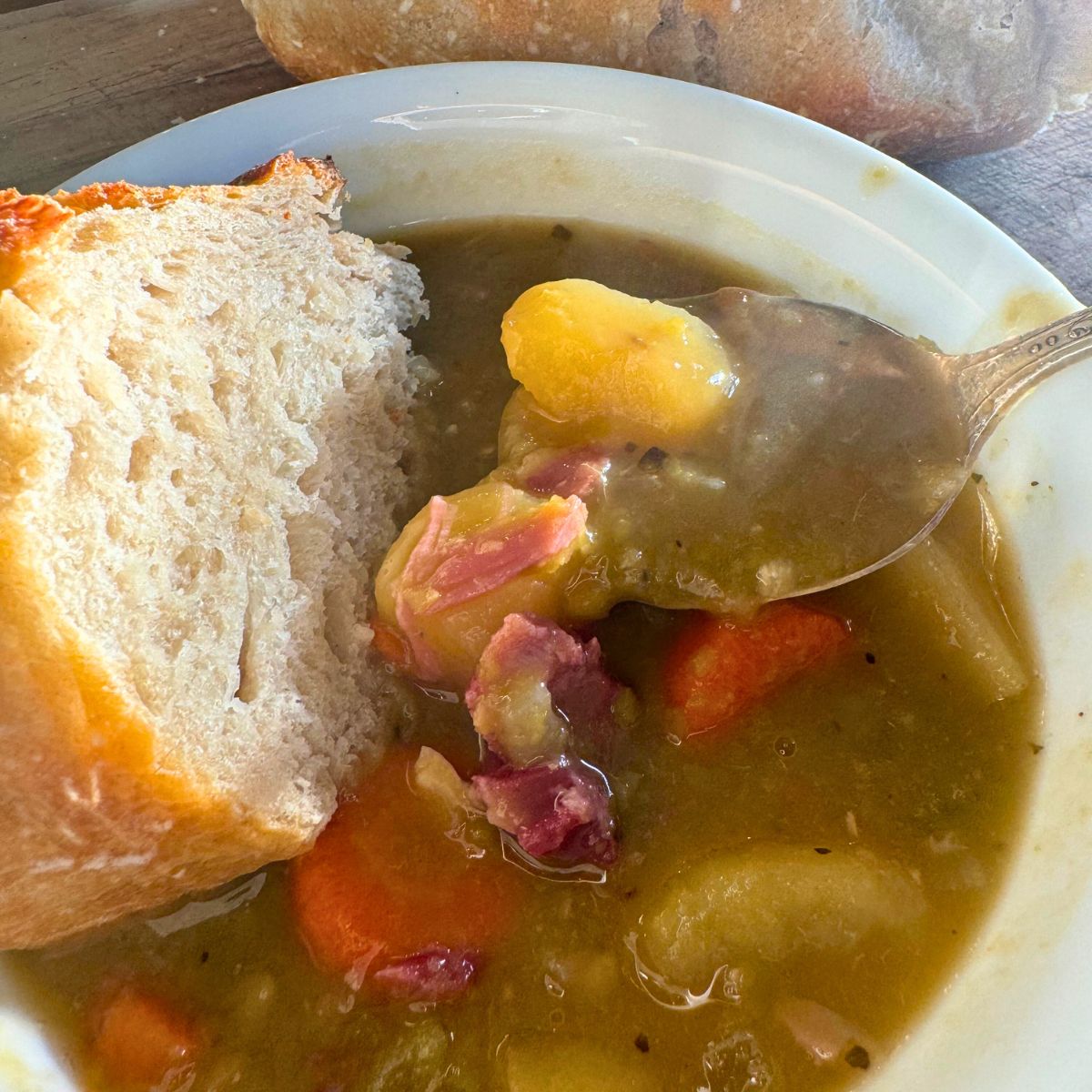
I love making a big batch of this split pea soup during the chilly fall and winter months—it pairs especially well with a warm, thick slice of crusty homemade sourdough bread. While I didn’t inherit a handed-down family recipe for this, I’ve spent years cooking and testing different split pea soups in my own kitchen, tweaking the liquid ratios and cooking methods until I found the perfect balance. Through plenty of trial and error, my biggest takeaway for the ultimate texture is keeping the potatoes and vegetables cut into thick, hearty chunks so they hold their shape and stay perfectly tender without turning to mush during the long simmer.

Homemade Split Pea Soup Ingredients
- Smoked Ham Bone, Ham Hock, or Leftover Ham Bone: This is the secret weapon for an incredible, deeply savory broth. In my kitchen, I’ve tested this with store-bought smoked ham hocks and leftover holiday ham bones; a meaty ham bone infused with natural smoke adds unmatched depth that water or plain stock just can’t replicate on its own.
- Dry Green Split Peas: The star of the show. I always look for vibrant, uniform green split peas that hold their shape well during the soak while softening into that signature velvety texture as they simmer.
- Broth (Chicken, Vegetable, or Homemade Ham Stock): The liquid foundation of your soup. I recommend using a low-sodium chicken or vegetable broth so you have total control over the final salt level, especially since the ham bone will release its own natural saltiness as it cooks.
- Apple Cider Vinegar & Water (for Soaking): Used during the pre-soak stage. Adding a splash of apple cider vinegar helps gently soften the outer skins and makes the soup much easier on digestion, which I’ve found to be a lifesaver for family members sensitive to heavy legume starches.
- Olive Oil: Used to sauté the aromatics at the very beginning, building a rich, flavorful base layer of fats that carries the savory herbal notes throughout the entire pot.
- Garlic Cloves, Yellow Onion, & Celery: The classic mirepoix trifecta. Sautéing these until translucent builds the savory background foundation that balances out the earthy flavor of the split peas.
- Carrots: Added for both natural sweetness and vibrant color. I prefer slicing them into hearty chunks so they retain a pleasant, tender bite rather than dissolving completely into the soup.
- Yukon Gold Potatoes: Unlike russet potatoes that tend to fall apart into mush, I specifically choose Yukon Golds because their natural buttery flavor and medium-starch content allow them to hold their structure in thick, chunky cuts while still helping to slightly thicken the overall broth.
- Fresh & Dried Herbs (Bay Leaf & Marjoram): While traditional recipes often rely heavily on thyme, I’ve tested various herb blends in my kitchen and found that a subtle pinch of sweet marjoram pairs exceptionally well with smoked ham and earthy peas without overpowering the flavor.
- Salt & Black Pepper: Used conservatively at the start and adjusted at the very end. Because salted ham bones and commercial broths vary wildly in sodium, seasoning at the end ensures your soup is never overly salty.
Vegetarian Soup Variation:
To make this soup vegetarian, just omit the ham and use vegetable stock instead of broth!

Soaking the Split Peas
In my kitchen, I’ve tested the pre-soak method both with plain water and with water combined with apple cider vinegar. The vinegar soak helps slightly soften the outer skins of the split peas ahead of time, which prevents them from blowing out or splitting too aggressively while keeping the interior cooking evenly during the long simmer.
- Why Soak? Split peas, like all legumes, contain complex sugars called oligosaccharides. Our bodies lack the enzyme to break down these sugars completely, which can lead to bloating and gas. Soaking helps break down some of these oligosaccharides in the peas, making them easier to digest and reducing any potential discomfort.
- 8 Hour Soak vs. Overnight: While overnight soaking (8 hours or more) is ideal, a minimum of 4 hours can still be beneficial. The longer soak allows more time for the oligosaccharides to break down.
- The Apple Cider Vinegar Trick: Adding a tablespoon of apple cider vinegar to the soaking water has a two-fold benefit. The mild acidity helps to further soften the split peas, leading to shorter cooking time. It may also contribute slightly to the breakdown of oligosaccharides.
The Apple Cider Vinegar Trick: Adding a tablespoon of apple cider vinegar to the soaking water has a two-fold benefit. In my kitchen, I’ve found it not only helps soften the split peas for a better texture and shorter cooking time, but it also makes the soup noticeably easier on my husband’s stomach by helping break down those heavy bean starches to prevent post-meal gas and bloating.
Split Pea Soup Recipe Notes
Ham Bone: Don’t just toss the ham bone after simmering! Pick the meat off the bone and shred or dice it. Return the diced ham to the pot with the vegetables for an extra protein boost and burst of flavor.
Creamy or Chunky? This recipe creates a hearty split pea soup with some texture from the whole vegetables. If you prefer a smoother, creamier soup, simply mash about half of the cooked potatoes in the pot with an immersion blender or potato masher towards the end of cooking.
Flavor Boosters: For an extra smoky ham flavor, use a smoked ham bone or brown it slightly in a pan before adding it to the pot with the broth. To add depth and brightness, consider a splash of white wine or lemon juice during the initial simmer.

Leftovers & Storage
Split pea soup is a champion leftover candidate! The flavors tend to meld even better the next day, and the soup naturally thickens as it sits. Here’s how to store your leftovers for future enjoyment:
- Cooling and Storage: Allow the soup to cool completely at room temperature before storing. This helps prevent bacteria growth. Once cool, transfer leftover soup to an airtight container.
- Refrigeration: This soup will stay safe in the refrigerator for 3-4 days.
- Freezing: For longer storage, you can freeze leftover soup for up to 3 months. Portion the soup into freezer-safe containers for easier thawing and reheating.
- Reheating: When reheating leftover soup, thaw it overnight in the refrigerator if frozen. Gently reheat the soup on the stovetop over medium heat, stirring occasionally, until warmed through. You may need to add a splash of water or broth to thin the soup slightly, as it can thicken further during storage.
I Serve Split Pea Soup With –
- Grilled Cheese Sandwiches!
- Sliced Warm Sourdough Bread
- Soft Sourdough Rolls
- and Moist Sourdough Cornbread
I want to know what YOU think, Please review the recipe card!
The Best Split Pea Soup with Ham
Equipment
- Dutch Oven 6 quart.
Ingredients
- 2.5 cups dried split peas
- 2 quarts water for soaking
- 2 tablespoons apple cider vinegar for soaking
- 2 quarts chicken or vegetable broth
- 1 bay leaf
- 1 tablespoon olive oil
- 3 large cloves garlic minced
- 2 pounds ham bone
- 1 large onion chopped
- 4 stalks celery chopped
- 4 carrots chopped
- 3 Yukon gold potatoes diced
- 1/2 teaspoon marjoram
- 1 teaspoon salt
- 1/2 teaspoon pepper
Instructions
- Soak dried split peas over night, or 8 hours, in a large bowl with 2 quarts water and 1 tablespoon apple cider vinegar.
- Drain and rinse the split peas under cold water after soaking to remove any debris.
- Add olive oil over medium heat to a large soup pot or dutch oven.
- Add minced garlic and simmer for 1 minute, till fragrant.
- Add chopped onion and sauté for 2-3 minutes till softened.
- Add broth, ham bones, soaked split peas, salt, pepper, marjoram and bay leaf.
- Bring to a boil, then reduce heat to low, cover your pot, and simmer for 1.5 hours, stirring every 20 minutes or so. Maintain a gentle simmer, adding more broth if needed to maintain liquid level, and stirring occasionally to prevent sticking.
- Remove ham bones and cut meat off, dice meat and return it to your pot.
- Add potatoes, carrots and celery.
- Simmer for about 40 more minutes until the vegetables are tender when pierced with a fork.
- Season with salt to taste, to adjust the final flavor to your preference.
- Remove Bay Leaf, Serve and Enjoy!
Video
Notes
Nutrition

About Juliea
Juliea is a mother of six, a sourdough baker, and a homestead builder living in Idaho. Alongside her husband and their horse, Dude, she manages a busy farmhouse and shares her love for scratch-cooking and simple homemaking. Through her blog and YouTube channel, she helps millions of families every year master the art of the handmade home.